
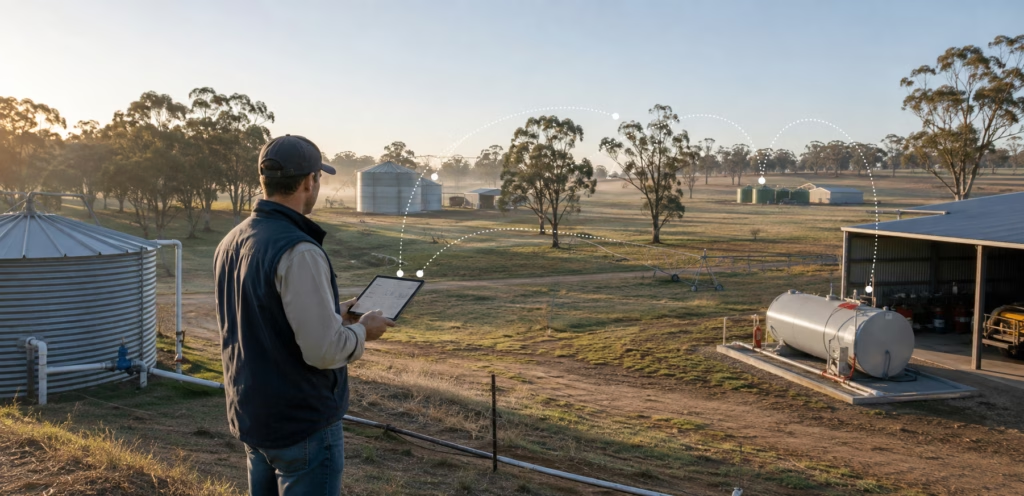
Across a working farm, tanks rarely sit in one convenient place. Water may be stored near a bore or irrigation area, while fuel, fertiliser and feed tanks are positioned where they are needed. Checking every asset can mean repeated trips across the property—only to find that some tanks did not need attention at all.
When a physical inspection is the only source of information, it is difficult to know which tank should be checked first. Remote tank monitoring provides another way to manage that process. It brings reported measurements to a central platform. This provides teams with the information they need before planning a site visit, refill or further investigation.
From Tank to Screen: How Remote Monitoring Works
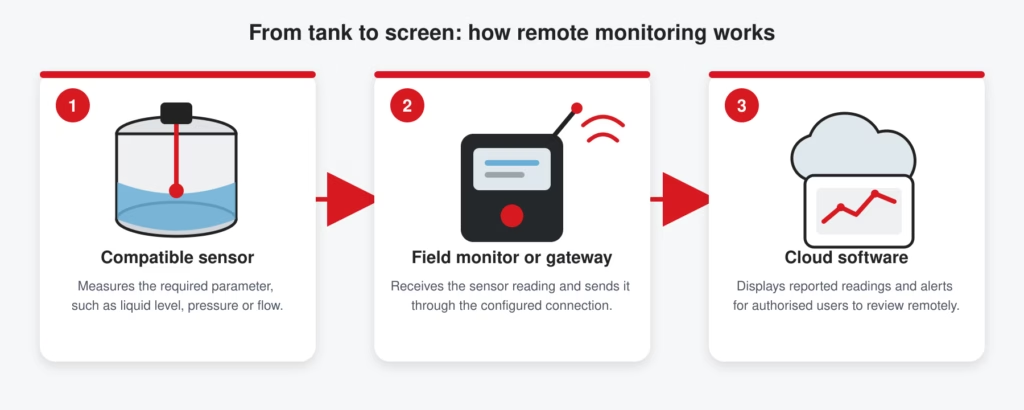
The technology is easier to understand when it is broken into three separate jobs:
- A compatible sensor measures the required parameter, such as liquid level, pressure or flow.
- A field monitor or gateway receives the sensor reading and sends it through the configured communications connection.
- Cloud software displays the reported information so authorised users can review readings and configured alerts remotely.

Once these roles are clear, the product choices make more sense. One option is a LevelCon remote monitoring system. Within the LevelCon range, StarPin is a compact, solar-powered gateway that connects compatible field sensors with the LevelCon cloud platform. Whether it is the right gateway will depend on the sensor, communications coverage, power, tank and wider site requirements.
What Can Be Monitored On An Agricultural Site?
Remote sensing technologies by Levelcon are perfect for those in the agricultural indsutry. It’s range of sensing techonolgies support applications involving water, fuels, lubricants, compatible chemicals, liquid fertiliser and liquid feed.
Water Tanks and Irrigation
For water storage, the first question is often whether the team needs to know the level in a tank, the flow through an irrigation system or both. Depending on the installation, a LevelCon system can use a compatible submersible pressure sensor or wireless Radar R3 to measure and report the water level remotely. Selected gateways can also connect to flow meters to collect and transmit flow data to the LevelCon platform for remote viewing.
Selected LevelCon gateways can also connect to compatible flow meters to collect and transmit flow data to the LevelCon Portal for remote viewing.
Having the option of remote information supports teams by providing them with a clearer starting point for the day. Rather than visiting every tank in the same sequence, available measurements can help identify which locations need attention. Remote monitoring does not replace the inspections. Instead it helps streamline controls and maintenance procedures required for the application.
Fuel and Lubricant Tanks
Fuel and lubricant tanks create a similar challenge when they are spread across sheds, depots and work areas. A compatible submersible hydrostatic, radar or ultrasonic sensor or another LevelCon sensing technology may be used, depending on the liquid and installation.. The team also needs to consider whether the tank is fixed or mobile before selecting the monitoring equipment.
Liquid Fertiliser Tanks
Liquid fertiliser requires particular care because it may not suit the same sensing method as water or fuel. For difficult materials, LevelCon offers the WP01L wireless laser level sensor. It uses non-contact LiDAR measurement, communicates wirelessly with compatible LevelCon monitoring equipment and has a stated product-dependent range of up to 40 metres.
For corrosive or aggressive liquids, material compatibility remains critical. LevelCon offers wired options such as the APT350 chemical-resistant hydrostatic sensor; however, the sensor materials, seals and sensing method must suit the specific chemical and concentration. Please contact Metromatics to confirm specific application details. Learn more about chemical tank level monitoring.
Liquid Feed and Viscous Products
Viscous products bring another set of measurement considerations. LevelCon lists liquid feed, molasses and similar materials as typical applications for the WP01L laser level sensor. Its non-contact measurement may suit tanks where placing a sensor directly in the product is impractical. However, the tank shape, mounting position, measuring range and behaviour of the material still need to be assessed.
Matching The Sensor To The Application
LevelCon offers wired and wireless sensors for remote monitoring rather than one universal agricultural sensor. Examples relevant to agricultural storage include:
- Radar R3: a wireless, non-contact 60 GHz radar sensor with a stated measuring range of 0.5 to 8 metres. LevelCon lists water, fuels, lubricants, chemicals and liquid feed among its typical applications.
- WP01L laser level sensor: a wireless non-contact sensor intended for difficult materials, including liquid fertiliser, molasses, viscous liquid feed and dry materials.
- Submersible hydrostatic sensors: available for applications that include water, fuels and compatible chemicals, with sensor construction selected for the medium.
- Wired radar and ultrasonic sensors: non-contact options for compatible tanks and materials, including water and other industrial liquids.
- Compatible flow meters: supported by selected LevelCon gateways where flow, rather than only stored level, forms part of the monitoring requirement.
There is no single ‘agriculture sensor’ that suits every tank. A better starting point is to define what the system needs to measure and the conditions in which it must operate. This includes the stored material, tank dimensions and fittings, required range and accuracy, available power, communications coverage, site conditions and preferred reporting frequency.
Choosing a Gateway For The Site

The gateway turns a measurement taken at the tank into information that can be reviewed elsewhere. StarPin is one LevelCon option for this role: it is compact, solar powered and uses supported cellular communications to send data from compatible sensors to the LevelCon platform. Other LevelCon gateways include the F100M, F100/F100MX and F200. Because these products do not share the same power, communications and installation arrangements, the site requirements should guide the choice.
For example, the F100M wireless tank level monitor supports cellular communication and optional satellite connectivity, depending on configuration. It can connect to several industrial sensor types, including submersible pressure, radar, ultrasonic, Modbus and serial devices. The F100/F100MX and F200 also support compatible wired and wireless sensing options.
Bringing Tank Information Into One View
The LevelCon cloud platform provides a central place to view reported tank and sensor information. Users can access monitoring information from network-connected devices and configure alerts. Its platform supports tank level, pressure, temperature and flow data when the connected sensors and equipment provide those measurements.
Bringing these kinds of readings together is particularly useful when a business manages tanks across a large property or several locations. This kind of remote sensing technology allows users to review the available information in one place, compare assets and decide where attention may be needed. The reporting intervals, alerts and measurements shown will depend on the selected sensors, hardware, connectivity and account setup.
What to Know Before Requesting a Recommendation
A useful recommendation begins with the application rather than a product number. Providing the following information can helkp us assess the best available option for your application:
- The stored liquid or material, including chemical name and concentration where relevant
- Tank dimensions, construction material and available process connections
- The required measurement range and accuracy
- Whether the asset is stationary or mobile
- Available power and solar exposure
- Cellular coverage and whether satellite communication may be required
- Preferred reporting frequency, alerts and software integration
- The operating environment and any hazardous-area requirements
With these details, we can help identify a suitable combination of sensor, LevelCon gateway, communications method and cloud-platform configuration for agricultural water, irrigation, fuel, liquid fertiliser, liquid feed or another compatible remote tank level monitoring system.
Talk to Metromatics About Your Tank Monitoring Needs
Metromatics supplies and supports LevelCon remote monitoring solutions in Australia and New Zealand. Contact our team with details of your stored material, tank and site so we can help assess an appropriate monitoring configuration.
Discuss Your Tank Monitoring Application
Frequently Asked Questions
What can LevelCon systems monitor in agricultural applications?
When paired with the appropriate sensor and configuration, a LevelCon system can monitor water, fuel, lubricants, compatible chemicals, liquid fertiliser, liquid feed, pressure and flow. The connected sensor determines what the system measures.
Can one sensor monitor every type of agricultural tank?
No. Water, fuel, fertiliser and feed may require different sensing methods. LevelCon offers radar, laser, ultrasonic and submersible pressure options, with the final choice based on the stored material, tank, measuring range, installation and environment.
Can tank information be viewed remotely?
Yes. A compatible LevelCon gateway sends reported sensor readings to the cloud platform, where authorised users can view them from a network-connected device. The available readings and alerts depend on the way the system is configured.
Can LevelCon monitor liquid fertiliser and liquid feed?
Yes, when the tank and application are suitable. LevelCon lists liquid fertiliser, liquid feed, molasses and other viscous products as applications for the WP01L laser level sensor. Metromatics still needs to confirm chemical and material compatibility for the specific installation.
Does remote monitoring replace manual inspections or safety systems?
No. Remote monitoring provides another source of operational information, but it does not replace required inspections, independent overfill protection, maintenance procedures or legally required safety controls.
