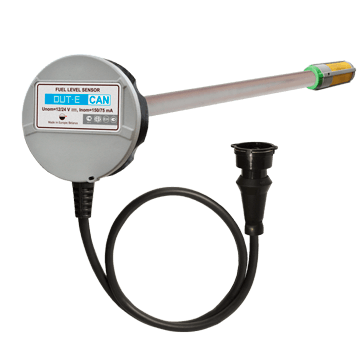
TECHNOTON DUT-E | WIRED FUEL LEVEL SENSOR
Know how much fuel is in your tank
The DUT-E measures fuel level in trucks, machinery, generators and
stationary tanks. Connect it to a compatible tracking or monitoring
system to see tank levels, review refuelling and investigate
unexpected draining.
Choose the wired DUT-E when your equipment has a suitable power supply
and you want to connect a fuel sensor to an existing tracker or
monitoring system. Metromatics can help select the output version,
probe length and installation approach for your tank.
START WITH YOUR APPLICATION
Where can the DUT-E help?
Truck and bus fleets
Check fuel remaining across vehicle tanks and review refills or unusual level drops in a compatible fleet platform.
Mobile machinery
Monitor fuel in construction, mining or agricultural equipment where regular manual tank checks are difficult.
Generators and stationary tanks
Track tank level to plan refuelling. A compatible connected system can also provide low-fuel or unexpected-drain alerts.
What can a connected system help you see?
Fuel remaining
View measured tank level and, after tank calibration, an estimate of the volume remaining.
Refuelling activity
Review increases in tank level alongside fuel delivery or vehicle records.
Unexpected draining
Investigate unusual level drops as possible fuel loss. A drop alone does not establish that theft occurred.
How the wired DUT-E fits into your system
01 / Measure
DUT-E in the tank
The capacitive probe measures fuel level. Calibration relates its reading to volume in your particular tank.
02 / Connect
Match the output
Select a DUT-E version compatible with the input and protocol supported by your tracker, gateway or controller.
03 / Monitor
Use the readings
Your connected system determines whether you can see readings remotely, create reports or receive fuel-event alerts.
Choose an output that suits your equipment
| DUT-E CAN | CAN J1939/S6 for a compatible telematics interface. |
|---|---|
| DUT-E 232 / 485 | RS-232 or RS-485 using the DUT-E COM protocol. Confirm protocol support in the receiving equipment. |
| DUT-E AF | Analogue voltage or frequency output for a compatible input. |
| DUT-E I | Current-output version listed by Technoton. Ask Metromatics to confirm the configuration and availability. |
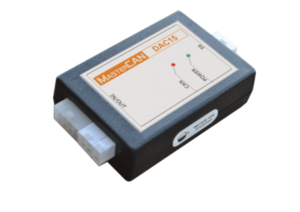
An optional S6 BT service adapter can help with supported configuration tasks. It does not turn the wired DUT-E into a battery-powered wireless sensor.
DUT-E specifications at a glance
| Measurement principle | Capacitive fuel level measurement |
|---|---|
| Power supply | 10–45 V DC |
| Operating temperature | −40°C to +85°C |
| Relative measuring error | No more than ±1% of the measuring part length. This is not a blanket accuracy claim for calculated tank volume. |
| Standard probe lengths | 350, 500, 700 and 1000 mm. Confirm any cut-to-length or extension arrangement for your tank. |
| Output versions | CAN J1939/S6, RS-232, RS-485, analogue/frequency, with a current-output version also listed by Technoton. |
Specifications should be checked against Technoton’s documentation for the particular DUT-E model being supplied.
What do we need to check before ordering?
Your tank and installation
- Tank depth, shape and number of tanks
- Fuel type
- Vehicle, machinery or stationary use
- Available power and wiring route
- Any hazardous-area requirements
Your monitoring system
- Tracker, gateway or controller make and model
- Available sensor inputs and protocols
- Whether you need remote readings or alerts
- Tank calibration and commissioning plan
Ask us to check the right DUT-E setup
Send us your tank depth, fuel type and the make and model of your current tracking or monitoring system. We can help identify the suitable DUT-E output, probe and accessories for your application.
Need a different way to monitor fuel?
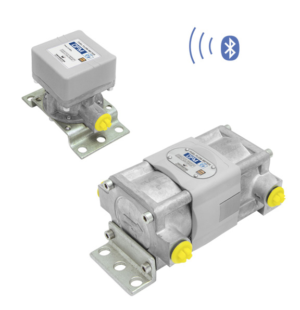
If routing a sensor cable is difficult, consider the wireless DUT-E S7. For changing fuel blends, explore the DUT-E 2Bio. If you need built-in mobile connectivity, ask about the DUT-E GSM. A fuel level sensor measures what remains in the tank. To measure fuel moving through an engine line, explore our fuel flow meters.