
As electric vehicles become more sophisticated, engineers increasingly rely on simulation models to predict battery performance, motor efficiency and thermal behaviour. However, even the most advanced models must be validated using real-world measurements. This is to ensure they accurately reflect how a vehicle performs under actual operating conditions.
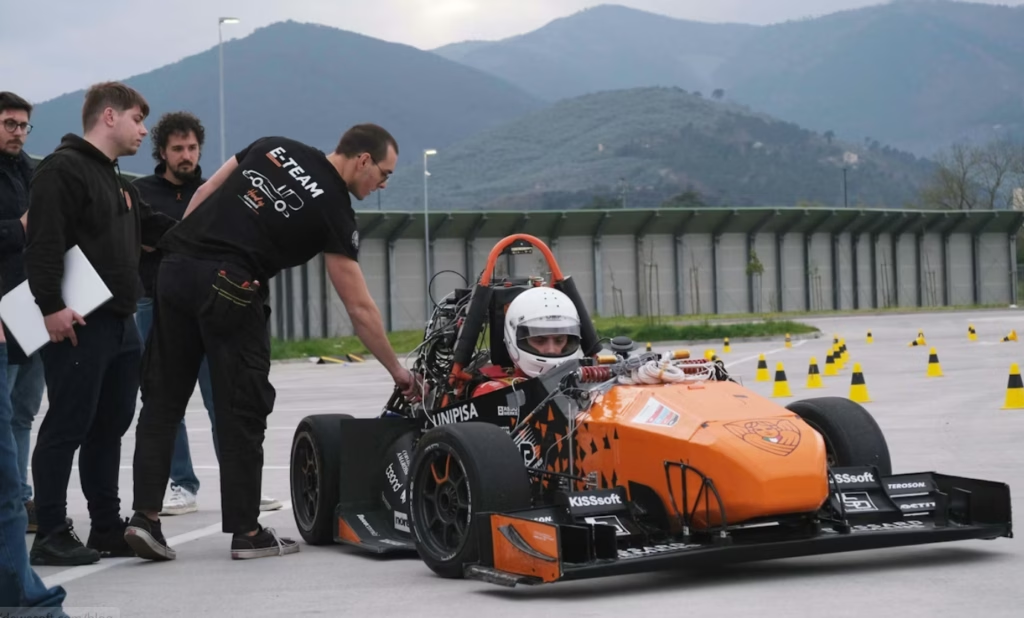
A recent project with the University of Pisa’s E-Team Squadra Corse Formula SAE team shows this. Linked electrical and thermal measurements help validate electric powertrain models. These measurements also boost confidence in vehicle design decisions.
Why Powertrain Model Validation Matters
Modern electric vehicles depend on accurate models for battery management, thermal control, energy consumption and overall system performance.
These models help engineers predict how batteries, motors and power electronics will respond to different operating conditions. Accurate models can reduce development time, improve vehicle efficiency and support safer system operation.
However, simulation alone is not enough. Real-world testing is required to verify that predicted results match actual vehicle behaviour.
Formula SAE Project Demonstrates Real-World Testing
Working with Dewesoft, the University of Pisa team used advanced data systems. They measured electrical and thermal data on their ET-17 Formula SAE electric race car.
The testing focused on validating both battery electrical models and motor thermal models. By collecting synchronized measurements during vehicle operation, the team was able to compare real-world performance against simulation predictions.
The project shows that fast, synchronised data capture gives engineers the detail they need. It helps them improve complex electric vehicle systems.It also helps them check these systems.
High-Accuracy Results for Battery and Thermal Models
The validation process produced impressive results.
The battery model achieved voltage prediction errors of less than 2%. Whilst the motor thermal model predicted temperatures within approximately 5°C of measured values.
These outcomes demonstrate how quality measurement data can improve model accuracy. In addition, provide engineers with greater confidence when designing battery management systems, thermal control strategies and overall vehicle performance models.
Accurate validation can also reduce development risks and minimise the need for costly redesigns later in the engineering process.
Applications Beyond Motorsport
Although this project was completed within a Formula SAE racing program, the same principles apply across a wide range of industries.
Applications include:
- Electric vehicle development
- Battery testing and validation
- Autonomous and connected vehicle programs
- University and research projects
- Defence vehicle development
- Advanced mobility and transportation systems
For Australian and New Zealand organisations developing electric or hybrid vehicle technologies, measurement-based validation provides a practical pathway to improving performance, reliability and efficiency.
Learn More
This article is based on a technical case study published by Dewesoft. Read the original article:
Electro-Thermal Powertrain Model Validation for a Formula SAE Race Car
Metromatics supplies Dewesoft data acquisition systems throughout Australia and New Zealand. Supporting applications including vehicle testing, battery development, electrical power analysis, structural monitoring and advanced research projects. Contact us now to find out more.