Rugged video I/O with DO-254 DAL-C design assurance
For aviation programs that require DO-254 DAL-C, hardware development assurance, traceability and certification evidence need to align with the wider system certification strategy. The WOLF-3184 adds that design-assurance pathway without limiting the underlying video I/O architecture to a single application type.
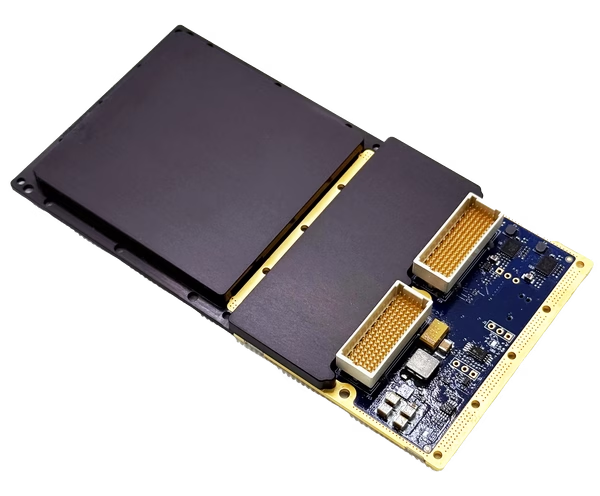
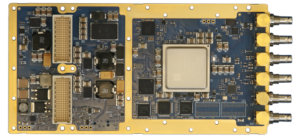
The WOLF-3184 DAL-C combines WOLF’s second-generation FGX2 frame-grabbing technology with an AMD/Xilinx Kintex UltraScale+ FPGA in a rugged XMC module developed in compliance with RTCA DO-254 DAL-C. This gives system designers a video I/O platform that can support certification-driven aviation programs while retaining the broader FGX2 capture, conversion and transmit capabilities used in rugged embedded video systems.
In practical terms, the module can help reduce the number of separate video-processing functions that need to be integrated by combining multiple digital and analogue video interfaces with onboard format conversion.
What to confirm before ordering the Wolf 3184 Rugged XMC Video I/O Module with DO-254 DAL-C
The correct WOLF-3184 DAL-C configuration depends on the certification strategy, carrier, required video interfaces and software environment. Before ordering, confirm:
- The DO-254 assurance requirements and certification evidence required by the program.
- XMC carrier compatibility and VITA 46.9 pin mapping.
- Required HD/3G-SDI input and output channel count.
- Progressive or interlaced SDI format requirements.
- DisplayPort HBR2/MST stream requirements and whether DisplayPort-to-SDI conversion is required.
- Whether STANAG-3350C or NTSC RGsB input is required.
- RS-422 or optional RS-485 requirements.
- Linux, Windows, VxWorks or INTEGRITY-178 tuMP software requirements.
- Cooling, conformal-coating and variant-locking requirements.
Metromatics can help confirm the module configuration against the host platform, video interfaces, software environment and program requirements before ordering.
Want to make sure you select the right product?
Talk to Metromatics the WOLF-3184 DAL-C, including your video interfaces, XMC carrier, software environment, thermal requirements and DO-254 program requirements. We can help confirm the appropriate configuration before ordering.
WOLF identifies the WOLF-3184 DAL-C for applications including machine vision, sensor processing and low-latency video I/O in harsh, SWaP-constrained environments.
Typical requirements it can address include:
- Capturing multiple HD/3G-SDI video feeds within an embedded mission computer.
- Receiving DisplayPort video and converting it directly to SDI inside the FGX2 processing path.
- Supporting digital and analogue video interfaces within the same XMC module.
- Moving high-volume video data into an NVIDIA GPU processing path using low-latency peer-to-peer communication in compatible architectures.
- Supporting programs where DO-254 DAL-C hardware development assurance forms part of the wider certification strategy.
Capture, convert and transmit multiple video formats
This rugged XMC video I/O module supports a dense mix of digital and analogue interfaces for systems that need to receive, convert and transmit video. Direct DisplayPort-to-SDI conversion takes place within the FGX2 processing path rather than relying on the host CPU to perform the format-conversion task.
This can simplify architectures that need to accept one video format and deliver another within the same embedded system. The exact channel count, signal format and carrier mapping should still be confirmed for the selected configuration.
Key video capabilities include:
- Up to four HD/3G-SDI inputs.
- Up to four HD/3G-SDI outputs.
- Two DisplayPort inputs with HBR2 and MST support.
- Up to two streams per DisplayPort input.
- One RGsB input supporting STANAG-3350C or NTSC, 24-bit RGB.
- Progressive and interlaced SDI format support.
- Direct DisplayPort-to-SDI conversion within FGX2.
Host, carrier and software integration
The module connects to the host through PCIe Gen3 x4 on XMC P15. Video and serial I/O are mapped through XMC P16 using VITA 46.9-compliant mapping for compatible 3U and 6U VPX configurations.
The carrier, operating system and serial-interface requirements therefore need to be considered alongside the video configuration when selecting the module.
Key integration capabilities include:
- PCIe Gen3 x4 host interface.
- Two RS-422 interfaces in the default configuration.
- Optional RS-422/RS-485 configuration.
- Linux driver support.
- Optional Windows and VxWorks drivers.
- Green Hills INTEGRITY-178 tuMP support.
- Compatibility with selected NVIDIA GPU modules for low-latency peer-to-peer video processing.
The standard module is conduction cooled and designed for harsh embedded environments. WOLF specifies a standard operating range from −40°C to +70°C, with operation to +85°C, together with VITA 47.1 Class V3 random-vibration performance and 40G shock testing to MIL-STD-810H Method 516.8.
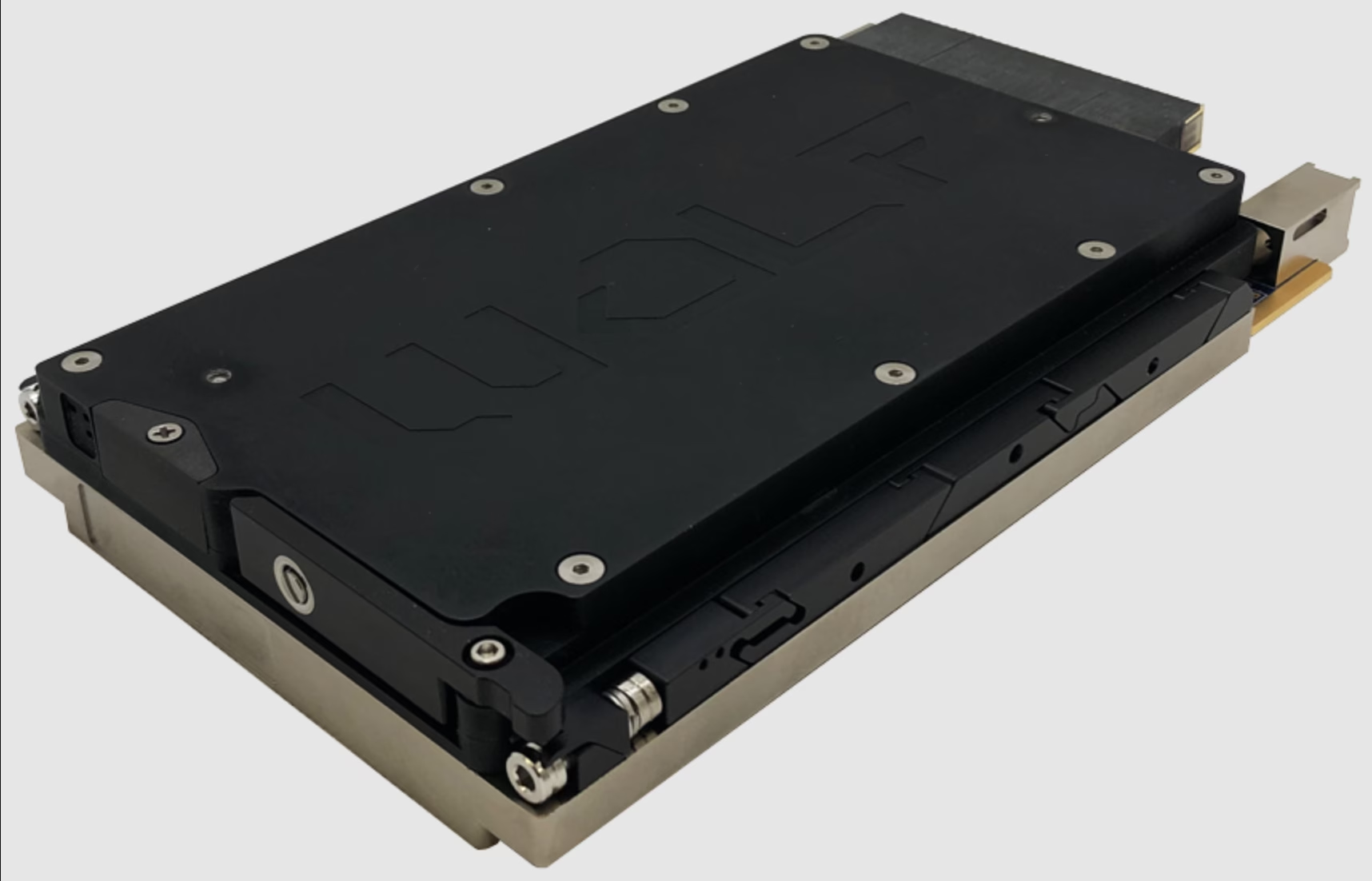
- 3U VPX dimensions: 160 × 100 × 25.4 mm
- Approximate weight: 1.3 kg
- Configurable module power range: 90–150 W
- ANSI/VITA 48 and VITA 65 support
WOLF specifies a rugged conduction-cooled construction for harsh embedded environments. The standard conduction-cooled configuration operates from −40°C to +70°C, with operation to +85°C, and is specified for VITA 47.1 Class V3 random vibration, 10G peak sine vibration and 40G peak shock.
Key mechanical and power specifications include:
- XMC 2.0 module.
- Dimensions: 143.75 × 74.00 mm.
- Maximum weight: 130 g; approximately 85 g without the heatplate.
- Power range: 12–25 W.
- Conduction-cooled construction.