
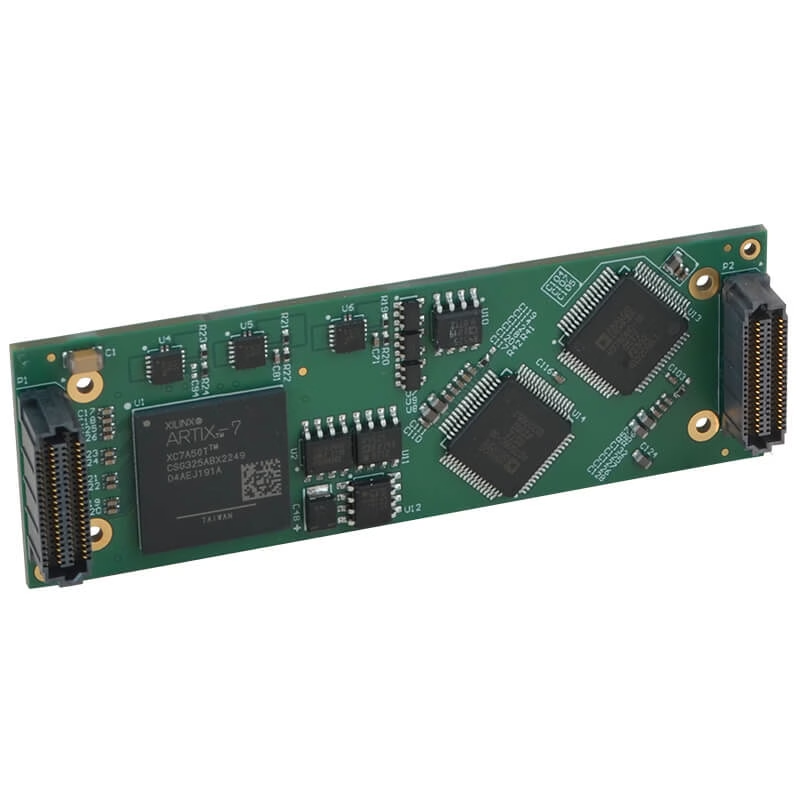
Choosing the right high speed analog input module can make or break a project, especially when you need to capture fast-changing signals with high accuracy. Engineers should consider several factors when selecting an analog input module for embedded systems: How fast should the module sample? Is simultaneous sampling required? What hardware can capture multiple sensor signals without timing errors? And what’s the real difference between 250 kSPS and 1 MSPS?
These questions matter because choosing the wrong module can lead to missed events, noisy data, or unreliable system performance.
In this guide, we’ll walk through the most important factors to consider when choosing a high-speed analog input module for embedded systems. We’ll also explain where the Acromag QMC350, distributed by Metromatics in Australia and New Zealand, fits into real-world applications.
If you’re comparing different embedded computing or data acquisition options, you can also browse our full range here:
Embedded Computing
Data Acquisition
Why High-Speed Analog Input Matters
Many modern systems—from defence vehicles to industrial robotics—generate fast, dynamic signals. If your hardware cannot keep up, you risk:
- losing critical information
- distorting the signal
- introducing timing errors
- missing high-frequency events
A high-speed module allows you to capture the full picture of what your system is doing. For example, vibration analysis, motor control loops, radar processing, and flight-test instrumentation all require fast sampling and accurate timing between channels.
Key Factor #1: Sampling Rate (Why 1 MSPS Matters)
How fast your module samples depends on your signal. Fast processes such as vibration, acoustic measurement, blast testing, or rapid control loops may require sampling rates above 250 kSPS.
A 1 MSPS (1 million samples per second) module, like the QMC350, ensures:
- better time resolution
- less aliasing
- the ability to capture high-frequency events
- smoother signal reconstruction
When 1 MSPS Makes a Difference
You will benefit from a 1 MSPS module if you work with:
- accelerometers
- ultrasonic sensors
- high-speed pressure transducers
- weapons system instrumentation
- motor controllers
- structural health monitoring
If your signal changes rapidly, this sampling rate is often essential—not just ideal.
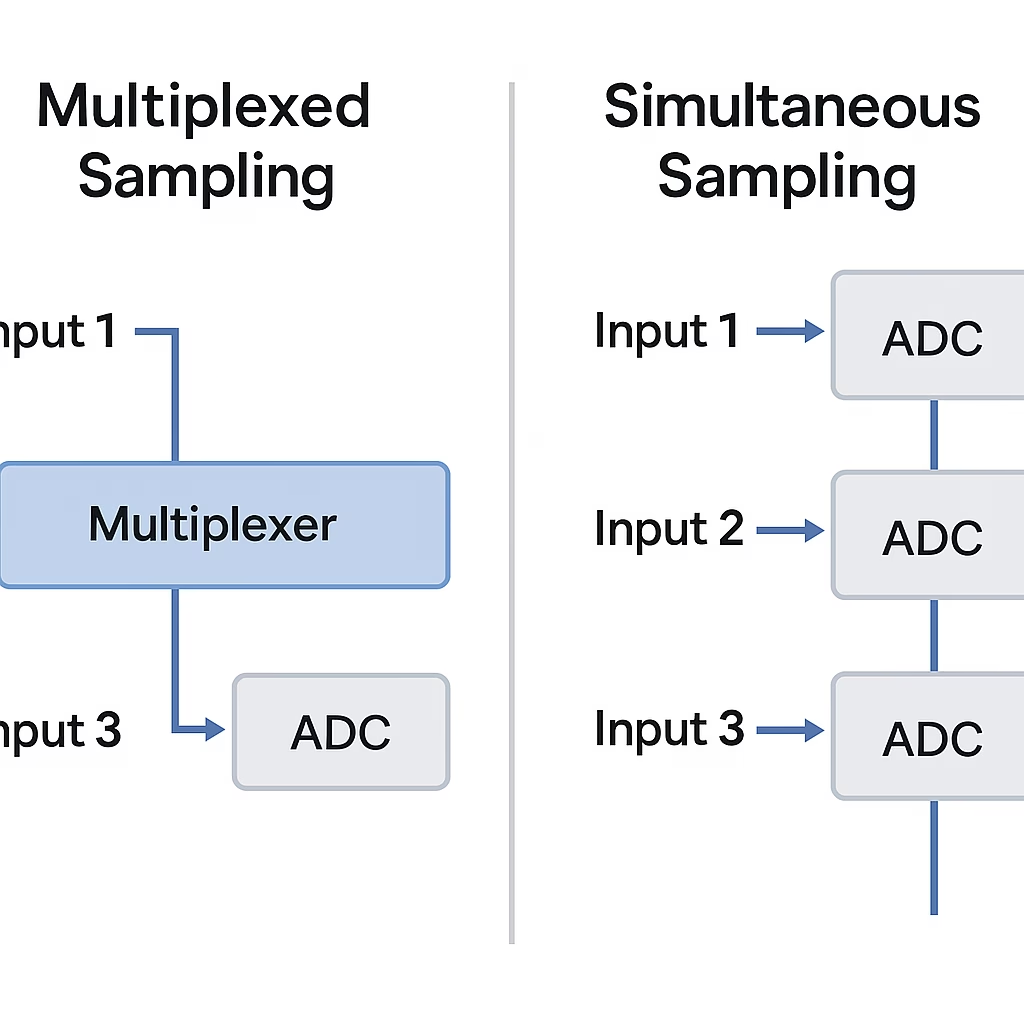
Key Factor #2: Simultaneous Sampling vs. Multiplexed Sampling
This is one of the most misunderstood topics in data acquisition.
Multiplexed Sampling
A single converter switches rapidly between channels.
Good for slow signals, not for time-aligned measurements.
Simultaneous Sampling
Each channel has its own ADC. This ensures:
- samples occur at the exact same moment
- no channel-to-channel delay
- accurate phase measurements
- reliable event correlation
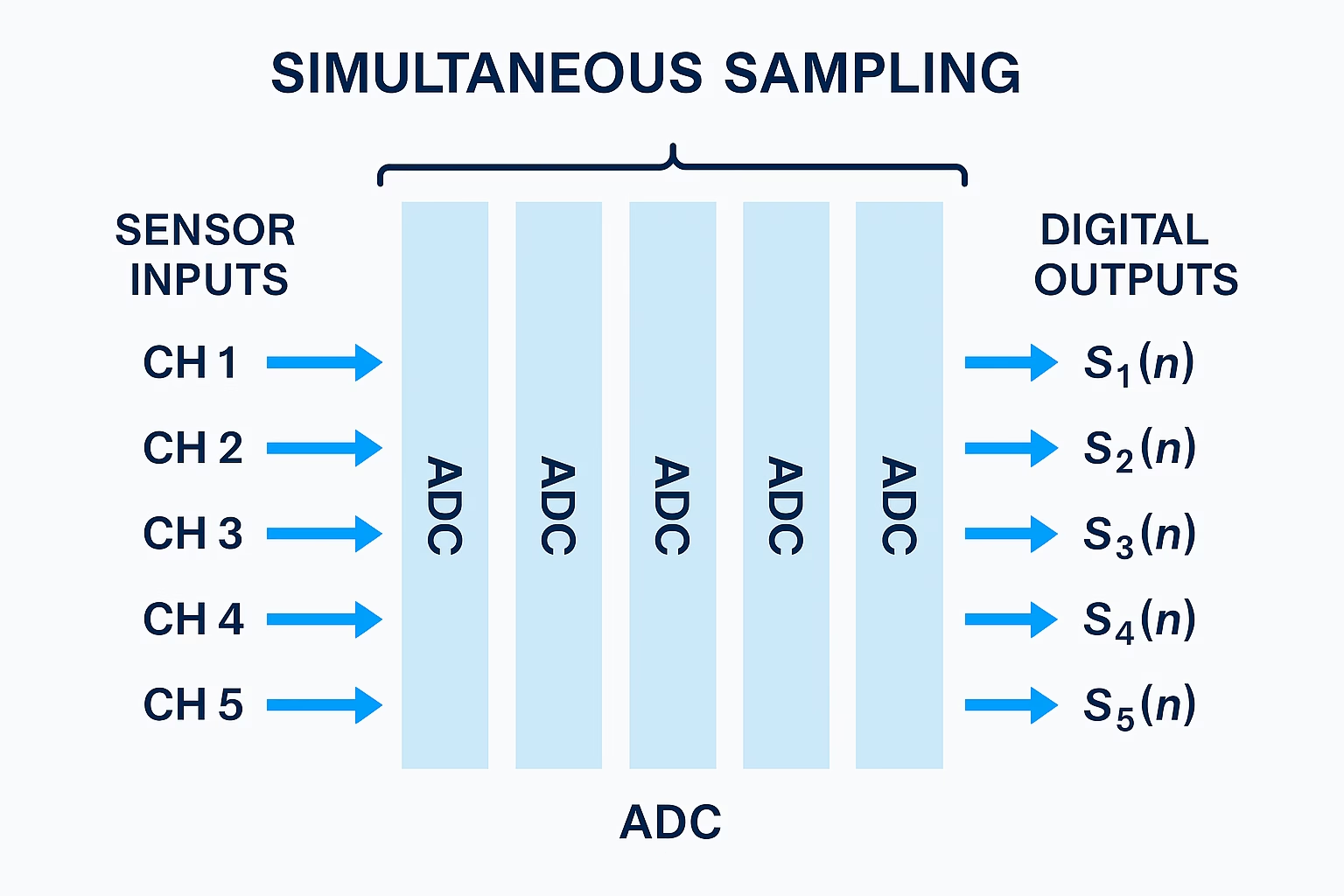
The QMC350 uses 20 individual ADCs (one per channel), making it ideal for applications where timing is critical, such as:
- vibration analysis
- radar signal capture
- dynamic structural testing
- real-time control systems
- multi-sensor fusion
If your channels must be perfectly aligned, simultaneous sampling is non-negotiable.
Key Factor #3: Input Ranges and Flexibility
Another important consideration when selecting an analog input module is whether the module will work with all of your sensors.
Look for modules with wide, software-selectable input ranges, such as:
- 0–5 V
- 0–10 V
- 0–12.5 V
- ±2.5 V
- ±5 V
- ±6.25 V
- ±10 V
- ±12.5 V
- ±20 V (differential)
These ranges allow one module to support many signal types, reducing hardware complexity and cost.
The QMC350 includes all of these ranges, making it extremely versatile for mixed-sensor environments.
Key Factor #4: Form Factor and SWaP-C Requirements
If your project is space- or weight-constrained—common in defence, aerospace, or drone applications—you need hardware that is:
- small
- low power
- rugged
- modular
The VITA 93 mezzanine standard delivers exactly that. The QMC350 measures just 26 × 78 mm, making it one of the most compact multi-channel modules available.
If you are integrating the QMC350 into your system, you’ll need a compatible Acromag VITA 93 carrier card. You can explore our range of supported carrier cards here.
Key Factor #5: Ruggedness and Reliability
A high-speed module is only useful if it performs consistently in demanding environments. When choosing hardware, make sure it offers:
- robust input protection
- resistance to shock and vibration
- stable performance across temperature ranges
- proven reliability in mission-critical applications
The QMC350 includes ±21 V input clamp protection and is available in conduction-cooled versions for harsh environments.
Why the Acromag QMC350 Is a Strong Choice
The QMC350 stands out because it combines:
- 20 channels
- 16-bit resolution
- 1 MSPS per channel
- simultaneous sampling
- wide input ranges
- rugged design
- VITA 93 compatibility
Its compact size and flexibility make it ideal for:
- defence vehicle systems
- aerospace testing
- embedded industrial controllers
- UAV and drone payloads
- scientific research systems
- mixed-sensor acquisition
As Metromatics is the authorised Acromag distributor in Australia and New Zealand, we provide local support, integration advice, and procurement assistance.
Why You Should Choose a High-Speed Analog Input Module from Metromatics
High-speed analog input modules are essential when your project demands accuracy, reliability, and the ability to capture fast-changing signals without compromise. At Metromatics, we understand these challenges because we’ve supported engineers in defence, aerospace, transport, research, and industrial automation for more than three decades. Our team brings deep industry experience and can provide local, hands-on support whenever you need guidance on selecting the right hardware. Whether you’re building a rugged embedded system or upgrading an existing platform, we help you compare options, interpret specifications, choose compatible carrier cards, and ensure your solution performs reliably in your specific application.
Want help selecting the right analog input module for your project?
Metromatics provides local technical expertise and supports engineers across Australia and New Zealand.
Contact us today to discuss your application.