
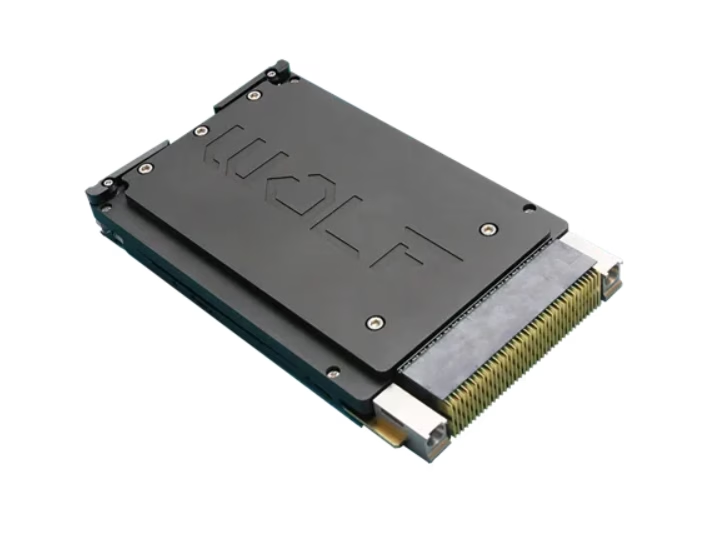
A VPX system is a modular embedded computing platform designed for high-speed data processing in demanding applications. It combines 3U or 6U plug-in modules with a compatible backplane, chassis, power architecture and cooling system.
VPX systems are used in Defence and aerospace applications that require high data throughput, specialised I/O and rugged deployment options. These applications include radar, electronic warfare, intelligence, surveillance and reconnaissance (ISR), mission computing, video processing, sensor processing and autonomous platforms.
Metromatics supplies VPX technologies in Australia and New Zealand, including CPU, GPU, FPGA, video-processing, carrier and I/O solutions. Metromatics can also assist with compatible chassis, backplane, power and system-integration requirements.
What Is the Difference Between VPX and OpenVPX?
VPX and OpenVPX are closely related, but they do not mean exactly the same thing.
VPX, based on the ANSI/VITA 46 family of standards, establishes the core mechanical and electrical platform for VPX plug-in modules. It introduced high-speed connectors and serial data fabrics as a modern alternative for systems requiring greater bandwidth than traditional parallel-bus architectures.
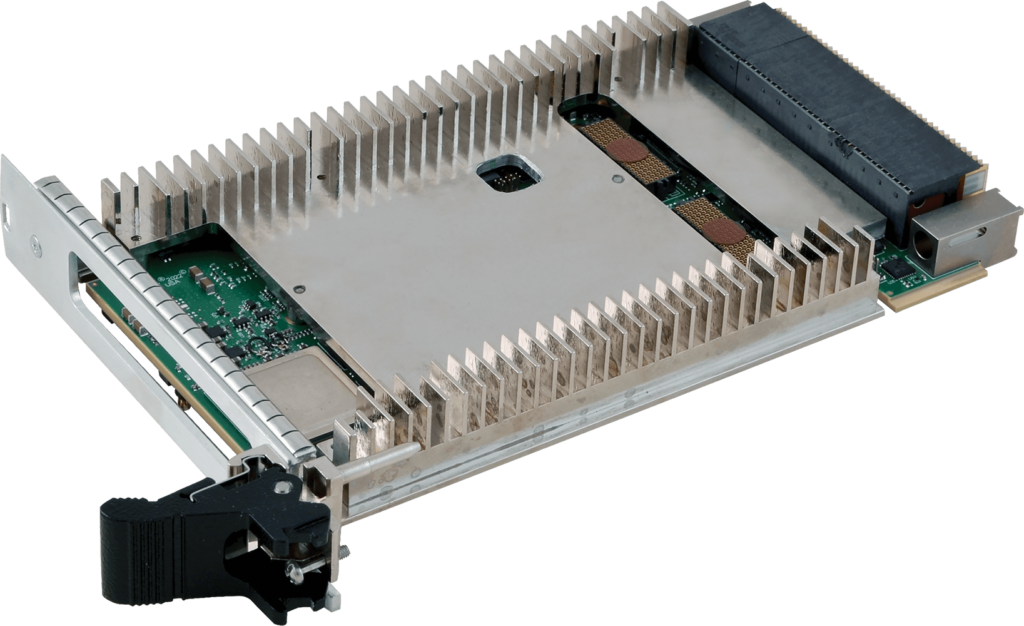
OpenVPX, defined by ANSI/VITA 65, provides the system-level architecture and profile framework. It defines module, slot and backplane profiles to improve interoperability between correctly matched components from different manufacturers.
This distinction is important because the VPX form factor alone does not guarantee that any VPX module will operate in any VPX chassis.
The following must be compatible:
- Module profile
- Slot profile
- Backplane profile and routing
- Data-plane, control-plane and expansion-plane connections
- Power requirements
- Cooling method
- Rear I/O requirements
- System-management implementation
OpenVPX improves interoperability through defined profiles, but it does not make every VPX component universally interchangeable.
Why Was VPX Developed?
Traditional VMEbus systems use a shared parallel-bus architecture and remain suitable for many established military, aerospace, industrial and scientific systems.
However, newer applications often require substantially greater data throughput between processors, sensors, storage devices, network switches and specialised I/O modules.
These applications can include:
- Radar and electronic warfare processing
- High-resolution video capture and distribution
- Real-time sensor fusion
- GPU-accelerated AI and machine learning
- Autonomous navigation
- High-speed networking
- Signals intelligence
- Mission-data recording
- Command-and-control systems
VPX supports high-speed point-to-point serial connections between compatible modules. Depending on the module, backplane design and applicable OpenVPX profiles, these connections may support fabrics such as PCI Express, Ethernet or Serial RapidIO.
The interfaces and speeds available depend on the individual modules, connector technology, backplane and system architecture. They are not universal capabilities of every VPX system.
Main Components of a VPX System
A complete VPX system normally consists of several compatible elements.
VPX Backplane
The backplane distributes power and provides the data and control connections between the installed modules.
Its slot profiles, topology and signal routing determine which modules and interfaces the system can support. Therefore, the backplane must be selected or designed around the required module profiles and overall system architecture.
VPX Chassis
The chassis houses and protects the backplane, plug-in modules, power equipment and cooling components.
Chassis options range from laboratory development platforms to rugged deployable systems for land, naval and airborne environments. The appropriate construction depends on the operating temperature, shock, vibration, electromagnetic compatibility, ingress protection, size, weight and cooling requirements.
View Metromatics’ rugged chassis and electronic-enclosure solutions.
3U or 6U VPX Plug-In Modules
A VPX system can incorporate different types of plug-in modules, including:
- Single-board computers
- GPU and GPGPU processing modules
- FPGA processing modules
- Data-acquisition and I/O modules
- Ethernet and network-switching modules
- Video-capture, conversion and graphics modules
- Storage and data-recording modules
- Timing and synchronisation modules
- VPX carrier cards for XMC, PMC or other mezzanine modules
Metromatics supplies WOLF rugged GPU, AI and video-processing solutions and Acromag VPX carrier cards for compatible VPX systems.
MIL-STD-1553 and ARINC Interfaces
MIL-STD-1553 and ARINC are not inherent VPX interfaces or requirements of the VPX standard.
They are specialised avionics communication interfaces that can be integrated into a VPX system using suitable interface hardware. Depending on the selected architecture, MIL-STD-1553 and ARINC 429/717 capability may be provided by compatible XMC or PMC mezzanine modules installed on a VPX carrier card or suitably equipped single-board computer.
In simple terms:
VPX provides the host computing architecture, while MIL-STD-1553 and ARINC provide specialised avionics interfaces within that architecture.
Engineers must check the carrier, mezzanine module, rear I/O routing, software support and overall VPX system set up to ensure compatibility.
| Product | Interfaces | VPX integration |
|---|---|---|
| XMC-1553 | 1–10 dual-redundant MIL-STD-1553 channels | Installed on a compatible XMC-equipped VPX carrier or SBC |
| XMC-A429 | 4–30 ARINC 429/575 channels; up to four ARINC 717 channels | Installed on a compatible XMC-equipped VPX carrier or SBC |
| XMC-MA4 | 1–5 MIL-STD-1553 channels and optional eight ARINC channels | Multi-protocol XMC module for compatible VPX carriers or SBCs |
| XMC-MAS | 1–2 MIL-STD-1553, up to four ARINC and four RS-232/422/485 channels | Compact multi-protocol XMC module for compatible VPX carriers or SBCs |
VPX Power Architecture
VPX systems may use plug-in power-supply modules defined by the ANSI/VITA 62 family of standards. However, not every VPX system uses a VITA 62 plug-in power supply.
The following requirements must be confirmed for the individual system:
- Input voltage
- Required output rails
- Total power capacity
- Power-supply module and backplane compatibility
- Cooling method
- Hold-up requirements
- Redundancy requirements
- Environmental and electromagnetic requirements
A VITA 62 power supply is not automatically compliant with MIL-STD-810, MIL-STD-461 or another military standard.
Important Standards Within the VPX Ecosystem
VPX is supported by a family of related VITA standards. Each addresses a different part of the system architecture.
| Standard family | Role within the VPX ecosystem |
|---|---|
| ANSI/VITA 46 | Establishes baseline VPX mechanical, electrical and connector requirements, with associated dot standards covering particular functions and fabric mappings |
| ANSI/VITA 48 | Defines Ruggedized Enhanced Design Implementation, commonly known as VPX REDI, including mechanical and cooling implementations |
| ANSI/VITA 62 | Defines modular power-supply requirements for particular VPX applications |
| ANSI/VITA 65 | Defines the OpenVPX system architecture and profile framework |
| ANSI/VITA 66 | Defines blind-mate optical interconnect arrangements for VPX |
| ANSI/VITA 67 | Defines blind-mate coaxial and RF interconnect arrangements for VPX |
The applicable standards depend on the selected modules, chassis, backplane, cooling method and application requirements.
Key Benefits of VPX Architecture
High-Speed Data Transfer
VPX supports high-speed serial connections between compatible modules. This makes the architecture suitable for systems that need to transfer substantial volumes of sensor, video or network data with low latency.
Actual bandwidth depends on the interface protocols, lane configuration, module capabilities, connector technology and backplane design.
Modular System Design
A VPX system can combine compatible processing, networking, storage and I/O modules to meet a specific application.
This allows designers to select the required CPU, GPU, FPGA, video, communications and data-acquisition functions without developing every element as custom hardware.
However, compatibility must be established at the module, slot, backplane, power, cooling and software levels.
Rugged Deployment Options
VPX modules and systems are available with different mechanical and cooling implementations. Depending on the product, these can include air cooling, conduction cooling and liquid-flow-through cooling.
Selected products may be designed or qualified for particular shock, vibration, temperature, humidity or electromagnetic requirements.
Manufacturers do not automatically design or qualify all VPX equipment for rugged operation or compliance with MIL-STD-810, MIL-STD-461 or DO-160. Confirm the environmental performance and standards compliance of each product and the complete integrated system.
Technology-Refresh Potential
A modular, profile-based architecture may allow individual processing, networking or I/O functions to be upgraded without replacing the entire system.
Nevertheless, a replacement module must still be compatible with the existing slot profile, backplane routing, electrical interfaces, software, power budget and cooling capacity.
Open-Architecture Options
OpenVPX provides the profile-based hardware framework used by many open-architecture Defence systems.
Manufacturers offer selected VPX products in configurations aligned with the SOSA Technical Standard. Always confirm SOSA alignment for the individual module, slot profile and complete system configuration—do not assume it applies to every VPX product.
Programs may also specify broader architectural requirements such as CMOSS or HOST. These requirements apply at the program or system level, so do not describe them as universal features of VPX hardware.
3U vs 6U VPX: What Is the Difference?
VPX plug-in modules are available in two principal Eurocard formats: 3U and 6U.
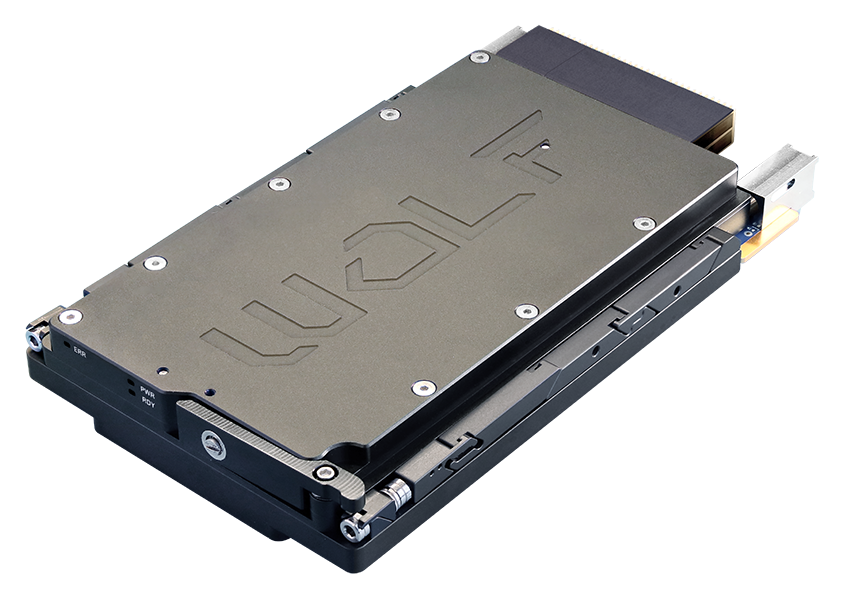
The correct format depends on the available space, required processing and I/O, power budget, cooling capacity, rear I/O requirements and applicable slot profiles.
| Consideration | 3U VPX | 6U VPX |
| Nominal PCB dimensions | 100 × 160 mm | 233.35 × 160 mm |
| Baseline VPX connector positions | P0 to P2 | P0 to P6 |
| Principal advantage | Compact format suited to SWaP-constrained systems | Greater PCB area and backplane connector capacity |
| Design implications | Less component area and potentially tighter thermal constraints | More space for components, mezzanines and I/O connectivity |
| Common use | Compact mission computers, vehicles, UAVs and sensor-processing systems | Applications requiring greater board area, I/O or mezzanine capacity |
| Selection factors | Processing, I/O, power, cooling and slot-profile requirements | Processing, I/O, power, cooling and slot-profile requirements |
A 6U module is not automatically more powerful than a 3U module. Processing capability depends on the processor, memory, interfaces, available electrical power and thermal design of the individual product.
How Does VPX Compare with VMEbus?
VMEbus remains in service across many long-life military, aerospace, industrial and scientific platforms. VPX is used for newer systems that need high-speed serial connectivity and current-generation processing technology.
| Consideration | VMEbus | VPX |
| Primary data architecture | Shared parallel bus | High-speed point-to-point serial fabrics |
| Product ecosystem | Established legacy and long-lifecycle systems | Modern high-performance embedded systems |
| Cooling options | Air-cooled and rugged conduction-cooled products are available | Air-cooled, conduction-cooled and other advanced implementations are available |
| Processing capability | Determined by the installed modules | Designed to accommodate modern CPU, GPU and FPGA processing |
| System definition | Based on VME standards and the individual system configuration | Module, slot and backplane profiles can be defined through OpenVPX |
| Typical project | Maintaining or upgrading an established system | New high-bandwidth mission and sensor-processing systems |
VPX is not automatically the correct replacement for every VME system.
The appropriate approach depends on the existing backplane, modules, I/O, software, qualification requirements and anticipated product lifecycle. Some projects may require a hybrid system, interface bridge or staged technology refresh.
Applications for VPX Systems
Defence and Aerospace
Depending on the selected modules and system configuration, VPX platforms can support:
- Mission computing
- Radar processing
- Electronic warfare
- ISR and EO/IR processing
- Signals intelligence
- Tactical networking
- Flight-test systems
- Mission-data recording
- Targeting and fire-control applications
Naval Systems
Naval applications can include sonar processing, combat-system computing, sensor integration, video distribution, tactical networking and data recording.
Land Vehicles
Rugged VPX systems can support situational awareness, sensor processing, communications, turret systems and vehicle mission computing in armoured and tactical vehicles.
Uncrewed and Autonomous Platforms
Compact 3U VPX systems can suit UAV, UGV and USV platforms requiring high-performance edge processing within defined size, weight, power and cooling constraints.
Industrial, Scientific and Transport Systems
VPX systems are used in demanding industrial, scientific and transport applications. Those that require high-speed data acquisition, specialised I/O, modular embedded computing or rugged deployment.
Suitability depends on the technical and lifecycle requirements of the individual application.
How to Specify a VPX System
Selecting VPX equipment involves more than choosing a processor or module size.
Before recommending a configuration, Metromatics will normally need to understand:
- Whether the required format is 3U or 6U
- Required module, slot and backplane profiles
- Number and type of chassis slots
- CPU, GPU or FPGA processing requirements
- Data-plane, control-plane and expansion-plane requirements
- Required interface protocols and bandwidth
- Video, network, avionics or other I/O requirements
- XMC, PMC or other mezzanine-module requirements
- Front-panel or rear I/O requirements
- Air, conduction or liquid-cooling requirements
- Power input and total system power budget
- Operating temperature range
- Shock and vibration requirements
- Electromagnetic compatibility requirements
- Applicable MIL-STD or DO-160 requirements
- SOSA alignment or other open-architecture requirements
- Storage and mission-data recording requirements
- Development, test or deployed-system requirements
- Software and operating-system requirements
- Expected product lifecycle
- Future upgrade requirements
Providing this information allows the module profiles, backplane routing, power architecture and cooling solutions to be considered together. Rather than selecting individual boards in isolation.
VPX Frequently Asked Questions
What does VPX stand for?
VPX is the recognised name of the embedded computing architecture defined by the ANSI/VITA 46 family of standards.
Although informal expansions of the term can be found online. VITA identifies the technology simply as VPX. Therefore, it is more accurate to use VPX as its recognised name rather than expand it as an acronym.
What is a VPX module?
A VPX module is a 3U or 6U plug-in board designed for a compatible VPX slot, backplane and chassis.
Depending on the product, a VPX module may provide processing, graphics, FPGA acceleration, networking, storage, video, switching or specialised I/O functions.
What is OpenVPX?
OpenVPX is the system architecture and profile framework defined by ANSI/VITA 65.
It provides standardised module, slot and backplane profiles that describe how compatible elements connect within a VPX system.
Are all VPX modules interchangeable?
No.
The module profile must be compatible with the chassis slot profile and backplane profile. Power, signal routing, data fabrics, cooling, rear I/O and system-management requirements must also be checked.
OpenVPX improves interoperability between correctly matched components, but it does not make every VPX module interchangeable.
Is VPX always rugged or MIL-STD compliant?
No.
VPX products are available for commercial, laboratory and rugged deployment. Some products are qualified to specified environmental or electromagnetic standards, while others are not.
Required compliance must be confirmed for the individual module, chassis and completed system.
Is every VPX product SOSA aligned?
No.
Selected VPX products and system configurations are designed to align with the SOSA Technical Standard. SOSA alignment must be verified from the manufacturer’s specifications and against the required slot and module profiles.
Is VPX suitable for AI and GPU processing?
Yes. Compatible VPX GPU and accelerator modules can support AI inference, video processing, sensor fusion and other high-performance embedded-computing workloads.
The system must provide suitable data bandwidth, electrical power and thermal management for the selected module.
Can MIL-STD-1553 or ARINC interfaces be used in VPX systems?
Yes.
MIL-STD-1553 and ARINC interfaces are incorporated using compatible interface hardware. Such as XMC or PMC mezzanine modules installed on a VPX carrier or appropriately configured single-board computer.
These avionics interfaces are not inherent features of VPX. Therefore, compatibility must be checked across the interface module, carrier, rear I/O routing, software and host system.
Can VPX replace an existing VMEbus system?
Potentially, but it is not normally a direct board-for-board replacement.
The migration strategy depends on the existing backplane, modules, software, field I/O, qualification requirements and lifecycle needs. A hybrid system, bridging solution or staged technology refresh may be appropriate.
VPX Solutions in Australia and New Zealand
Metromatics supplies VPX technologies for Defence, aerospace and other demanding embedded-computing applications across Australia and New Zealand.
Available solutions include:
- CPU, GPU and FPGA processing
- Graphics and video processing
- AI and high-performance embedded computing
- Ethernet and network switching
- VPX carrier cards
- Data-acquisition and specialised I/O
- MIL-STD-1553 and ARINC interface options
- Rugged chassis and electronic enclosures
- Selected backplane and power options
- System-integration support
Metromatics can assist customers with new VPX systems, system upgrades and the integration of compatible modules and supporting hardware.
Contact Metromatics with your required form factor, processing, I/O, profiles, cooling, power and environmental requirements. Our team can help identify an appropriate VPX configuration for your application.
Contact Metromatics to discuss your VPX system requirements.