
Embedded GPU processing is increasingly used in airborne and near-space sensing platforms. Especially, where size, weight, and power (SWaP) constraints limit conventional computing options. A recent example described by WOLF Advanced Technology is the PUEO stratospheric balloon mission operating above Antarctica. Demonstrating how embedded GPU modules supported development activities associated with high-performance signal processing in an extreme airborne research environment.
Compact computing platforms help advanced sensing systems work reliably near the edge of space. Long-duration balloon missions like PUEO show this in practice.
PUEO: A Near-Space Balloon Platform for Airborne Payload Processing
The Payload for Ultrahigh Energy Observations (PUEO) mission is designed to detect ultrahigh-energy neutrinos. Firstly, those are particles produced by extreme astrophysical events such as black hole formation and neutron star mergers.
The system operates by detecting faint radio signals generated when these particles interact with Antarctic ice. Suspended beneath a long-duration scientific balloon launched from McMurdo Station, the payload observes radio emissions travelling upward through the ice sheet below.
This approach effectively turns the Antarctic continent into part of the detection system. Therefore, allowing researchers to observe signals across a very large sensing area from a high-altitude platform.
Balloon-borne missions of this type provide an important alternative to orbital spacecraft. Achieved by enabling recovery of instrumentation after flight while still operating in near-space conditions.
Engineering Constraints of Stratospheric Payload Platforms
PUEO operated at approximately 35–40 km altitude (around 120,000 feet), within the stratosphere. At this height, payload systems must function under conditions very different from conventional aircraft environments.
Typical constraints include:
- extremely low atmospheric pressure
- very low temperatures
- limited opportunities for conventional air cooling
- restricted electrical power availability
- autonomous long-duration operation requirements
Because of these conditions, stratospheric payload platforms provide a useful environment for developing and validating compact sensing and processing architectures.
Real-Time Signal Processing Requirements in Balloon-Based Observatories
The PUEO payload uses an array of antennas to detect weak radio signals. Generated by neutrino interactions within Antarctic ice. Combining and analysing signals from multiple antennas improves detection sensitivity compared with earlier balloon-based experiments.
Efficient signal processing is therefore essential to:
- interpret radio-frequency observations
- manage large sensor data volumes
- support extended autonomous operation during long-duration flights
- maximise the scientific return from each balloon campaign
These requirements highlight the importance of compact high-performance processing platforms in airborne sensing systems.
The Role of Embedded GPU Computing During Development
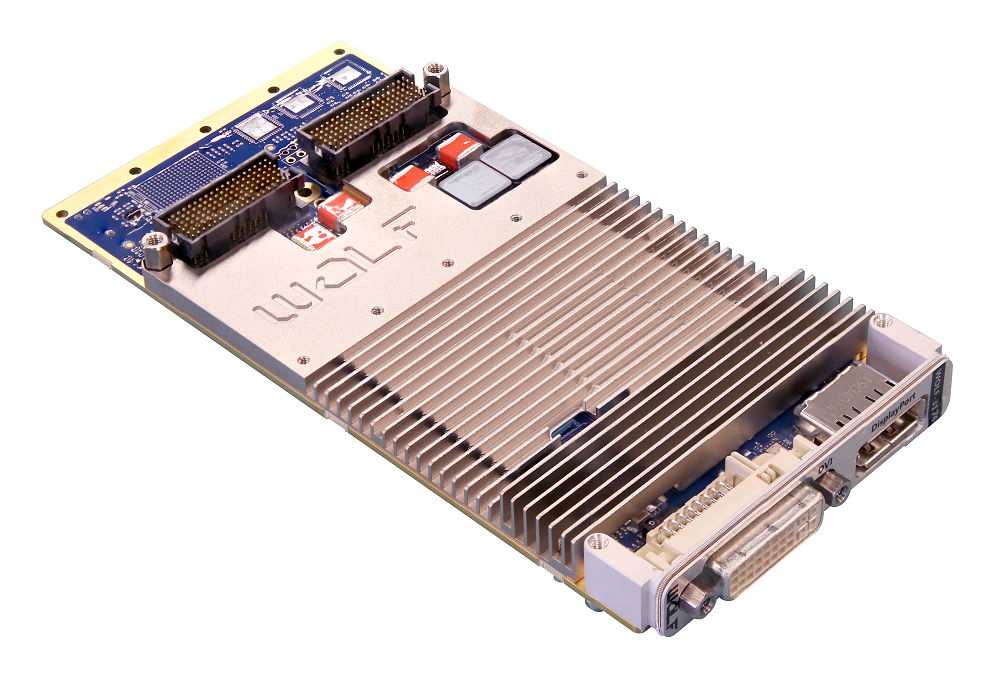
In its mission article, WOLF Advanced Technology says its embedded GPU modules supported PUEO signal-processing development. These modules include the WOLF-3176, WOLF-3476, and WOLF-3170.
These modules were used during integration and development to support high-performance computing tasks. These tasks analysed radio data from the antenna array.
This example demonstrates how embedded GPU platforms can assist research teams working with complex sensor datasets. Especially, where computing performance has strict SWaP constraints.
Why Stratospheric Balloon Platforms Matter for Airborne Sensing Systems
Long-duration balloon platforms occupy a unique position between aircraft and spacecraft. They provide access to near-space operating conditions. Whilst maintaining shorter development timelines and lower mission costs than orbital systems.
Advantages include:
- exposure to near-space environmental conditions
- recoverable instrumentation after flight
- rapid iteration compared with satellite development cycles
- suitability for validating sensing and processing approaches prior to space deployment
Because of these characteristics, balloon platforms are widely used in astrophysics, atmospheric science, and remote sensing research programs.
Embedded GPU Processing for SWaP-Constrained Payload Platforms
The PUEO example illustrates how compact GPU-accelerated processing platforms support sensing applications where system resources are limited.
Typical characteristics of these environments include:
- restricted cooling capability
- tight mass and volume constraints
- limited electrical power availability
- autonomous operation requirements
These conditions are common across many airborne and near-space sensing applications. Including scientific instrumentation platforms and advanced sensor processing systems.
Local Availability in Australia and New Zealand
Metromatics supplies embedded GPU processing solutions from WOLF Advanced Technology across Australia and New Zealand. These platforms support organisations developing airborne instrumentation, sensor processing architectures, and advanced research payload systems requiring high-performance compute within SWaP-constrained environments. Contact Metromatics to learn more.