
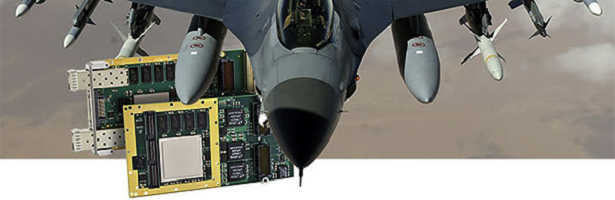
FPGA modules (Field-Programmable Gate Array modules) provide powerful, reconfigurable logic for embedded systems, industrial automation, defence, transport, and high-speed data processing. When you need custom logic, deterministic timing, parallel processing, or high-bandwidth I/O. – An FPGA-based solution delivers performance that microcontrollers and CPUs can’t match.
Metromatics supplies a complete range of Acromag FPGA modules. Including Artix™, Kintex™, and Zynq® UltraScale+™ MPSoC devices. This guide explains what an FPGA is, why engineers choose them, and how to select the right module for your performance and application requirements.
What Is an FPGA Module?
An FPGA is a programmable semiconductor device containing logic blocks, memory, DSP slices and high-speed I/O. Unlike fixed-function hardware, FPGAs can be programmed and reprogrammed to implement custom digital circuits that operate with:
- True parallelism
- Ultra-low latency
- Deterministic timing
This makes FPGA modules ideal for:
- High-speed data acquisition
- Digital signal processing (DSP)
- Protocol conversion and custom interfaces
- Sensor fusion and real-time control
- Embedded computing and automation systems
Why Choose an FPGA Module?
FPGA modules offer several important advantages:
Parallel Processing
Multiple operations run simultaneously, enabling high throughput and real-time responsiveness.
Custom I/O Interfaces
Support for LVDS, TTL, differential I/O, serial interfaces, PCIe, Aurora, Ethernet and more — or build your own proprietary protocol.
Hardware Acceleration
Dramatically increase speed and reduce CPU load for DSP, filtering, encryption, analytics, and high-frequency control.
Deterministic Timing
Perfect for mission-critical environments such as defence, aerospace, transport and industrial motion control.
Future-Proof Flexibility
Logic can be updated as your system evolves — with no hardware redesign required.
FPGA Module Performance Levels

To choose the right FPGA, match your application to the appropriate performance tier:
1. Entry-Level FPGA Modules (Cost-Effective Logic & I/O)
- Spartan™ or Artix™ FPGA families
- Ideal for simple logic, digital I/O expansion and protocol bridging
- Used in compact embedded and industrial systems
2. Mid-Range FPGA Modules (Balanced Performance)
- Artix™ or Kintex™ FPGA devices
- Larger logic capacity and more DSP blocks
- Suitable for mid-range DSP, automation, and mixed-signal processing
3. High-Performance FPGA Modules (Real-Time Processing & High Bandwidth)
- Kintex™ or Zynq® UltraScale+™ MPSoC
- Combines FPGA fabric with powerful ARM CPU cores
- Ideal for high-speed data processing, ML acceleration, sensor fusion, defence and aerospace systems
- To discover more by reading the white paper on What is FPGA Zynq ultrascale with MPSOC
FPGA Comparison Table – Artix vs Kintex vs Zynq UltraScale+ MPSoC
| Feature | Artix FPGA | Kintex FPGA | Zynq UltraScale+ MPSoC |
|---|---|---|---|
| Performance Level | Entry-level | Mid–High performance | High–performance hybrid (CPU + FPGA) |
| Best For | Basic logic, digital I/O expansion, cost-sensitive designs | DSP, real-time processing, high-speed data paths | Embedded computing, sensor fusion, video, AI, defence systems |
| Logic Density | Low to mid | Mid to high | High (plus integrated CPU cores) |
| DSP Resources | Limited | High | Very high |
| Processing Architecture | FPGA fabric only | FPGA fabric only | ARM Cortex-A53 / R5 CPUs + FPGA fabric |
| Parallel Processing | Good | Excellent | Exceptional (CPU + PL accelerated) |
| Data Throughput | Moderate | High | Very high (supports multi-gigabit I/O) |
| I/O Flexibility | Moderate | High | Very high |
| Typical I/O Standards | LVDS, LVCMOS | LVDS, high-speed serial, DDR, GTX transceivers | LVDS, high-speed serial, PCIe, DisplayPort, Ethernet |
| High-Speed Serial Support | Limited or none | Yes (GTX/GTP transceivers) | Yes (multi-protocol serial transceivers) |
| Memory Interfaces | Basic | DDR3/DDR4 support | On-chip memory + full DDR4/LPDDR4 support |
| Embedded Processor Included | No | No | Yes (multi-core ARM processors) |
| Real-Time Control | Good | Very good | Excellent (ARM R5 real-time cores) |
| Power Efficiency | Very high (lowest power) | Balanced | Higher power, but powerful |
| Cost | Lowest | Moderate | Highest |
| Ideal Applications | Digital I/O, timing, basic control, protocol bridging | DSP, signal processing, automation, instrumentation | Defence, aerospace, sensor fusion, video, ML acceleration, complex embedded systems |
How to Choose the Right FPGA Module
Logic Capacity
How many logic cells, LUTs, DSP slices and memory blocks does your application require?
I/O Requirements
Consider the number of signals, I/O standards, speed requirements and connector type.
Data Throughput
High-bandwidth applications benefit from DMA support, on-board memory and fast serial/parallel interfaces.
Processor + FPGA Combination
If you need both CPU control and hardware acceleration, choose a Zynq UltraScale+ MPSoC module.
Scalability & Future Changes
If your system may evolve, selecting a larger FPGA family provides room for feature growth.
Typical FPGA Module Applications
- Industrial automation and motor/motion control
- High-speed data acquisition
- Digital signal processing and filtering
- Aerospace, defence and mission-critical systems
- Transport, rail and avionics electronics
- Protocol conversion and custom I/O
- Sensor fusion, radar, sonar, telemetry and control
Acromag FPGA Modules from Metromatics
Metromatics supplies the full range of Acromag FPGA modules in mPCIe, AcroPack, XMC and PMC formats, including:
- Artix-based FPGA modules — flexible, low-power and cost-effective
- Kintex-based FPGA modules — for advanced DSP and real-time applications
- Zynq UltraScale+ MPSoC modules — combining multi-core ARM processors with high-speed FPGA fabric
All modules include:
- Development libraries and example HDL
- Carrier card options
- Windows and Linux support
- Industrial temperature and defence-grade variants
- Local Australian support through Metromatics
Why Engineers Choose FPGA Modules from Metromatics
- Local Australian technical support
- Deep experience in defence, aerospace, transport and industrial markets
- Access to Acromag’s engineering and product specialists
- Assistance with module selection and system integration
- Long-life, high-quality, industrial-grade hardware
Need Help Choosing the Right FPGA?
If you’re unsure which FPGA module suits your application, our team can help. We work with defence primes, system integrators, OEMs and industrial engineers. In addition, we match the correct FPGA device to your performance, environmental and integration requirements.
Contact Metromatics to speak with an FPGA specialist.