
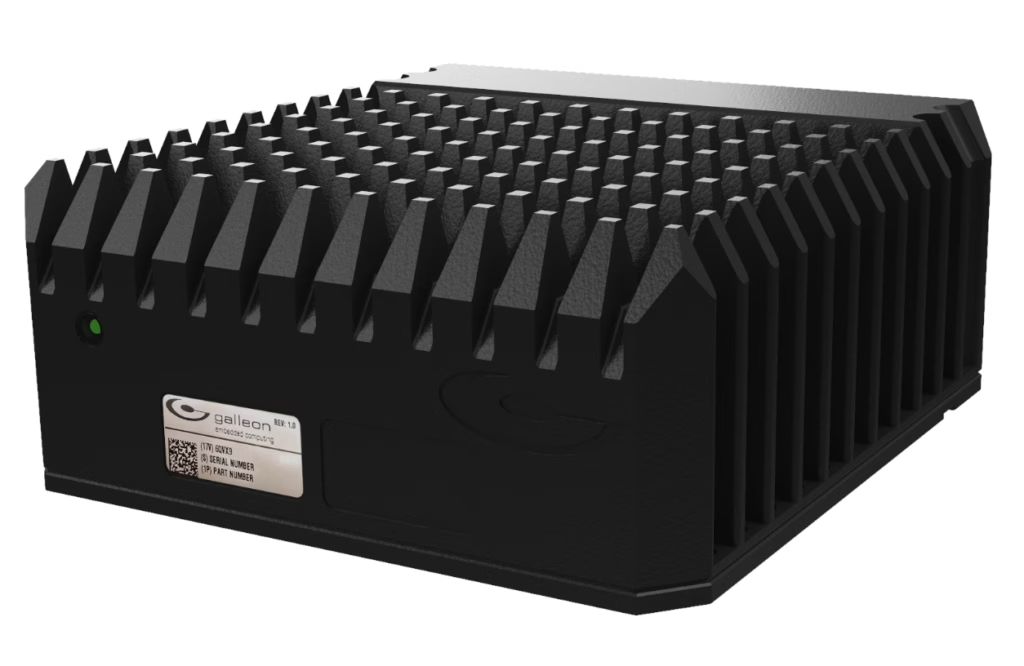
Modern Military Operations Demand Computing at the Tactical Edge
Modern defence operations generate enormous volumes of information from sensors, communications equipment, autonomous platforms and mission systems. Surveillance cameras, radar, electronic warfare sensors, GPS receivers, unmanned vehicles and battlefield networks all produce data that requires processing, analysis and action—often within seconds. This article explains how rugged embedded computers in C5ISR systems enable reliable edge computing, sensor fusion and mission processing, while exploring the key technologies and selection considerations for defence applications.
Traditionally, defence organisations sent much of this information back to command centres for processing. However, today’s operational environments increasingly require personnel and systems to make decisions at the tactical edge, where limited, disrupted or unavailable communications can restrict access to centralised processing. In contested environments, relying solely on cloud services or remote processing introduces latency and creates vulnerabilities if communications are disrupted.
This shift has made rugged embedded computers in C5ISR systems a fundamental part of modern defence operations. Rather than transmitting every piece of raw sensor data across the network, these computers process information closer to where sensors generate it, enabling faster decision-making while reducing network bandwidth requirements.
Rugged embedded computers provide the processing capability at the centre of modern Command, Control, Communications, Computers, Cyber, Intelligence, Surveillance and Reconnaissance (C5ISR) architectures. Designed to operate reliably in harsh military environments, these systems integrate sensor data, run artificial intelligence (AI) algorithms, manage communications and support mission-critical applications across land, sea, air and autonomous platforms.
What Are Rugged Embedded Computers?
A rugged embedded computer is a purpose built computing platform designed to deliver reliable processing performance in environments where conventional commercial computers would be unlikely to operate reliably.
Manufacturers engineer rugged embedded computers to withstand demanding operating conditions that standard desktop PCs and industrial computers may not tolerate, including:
- Continuous vibration
- Mechanical shock
- Dust and airborne contaminants
- Moisture and water ingress
- Wide operating temperature ranges
- Electromagnetic interference (EMI)
- Unstable vehicle power supplies
These conditions are common across military vehicles, naval vessels, aircraft, unmanned systems and forward operating environments.
Unlike general-purpose office computers, engineers typically integrate embedded computers directly into larger systems, where they perform dedicated functions rather than everyday office applications, such as:
- Sensor processing
- Mission computing
- Vehicle management
- Navigation
- Data recording
- Communications management
- Artificial intelligence inference
- Video processing
- Situational awareness
Because these computers often perform mission critical functions, reliability is a primary design objective. Many rugged embedded computers use fanless architectures that rely on passive or conduction cooling rather than moving parts, reducing potential failure points and improving long-term reliability in dusty or vibration intensive environments.
Manufacturers also design rugged embedded computers to support long product lifecycles. Defence platforms frequently remain in service for decades, making long-term component availability, configuration management and ongoing support important considerations throughout a program’s lifecycle.
Why Modern C5ISR Systems Depend on Edge Computing
The increasing capability of military sensors has dramatically increased the volume of data generated during operations. For example, Electro-optical cameras, infrared sensors, radar systems, electronic support measures, acoustic sensors and autonomous platforms can collectively generate more information than tactical communication networks can continuously transmit.
Simply sending all raw sensor data back to a headquarters for analysis is often impractical due to several factors, including the following:
1. Communications bandwidth
Available communications bandwidth is finite. Tactical radio networks and satellite communications may become congested or prioritised for other operational traffic. Processing data locally reduces the amount of information the system needs to transmit.
2. Latency
Many military applications require near real time decision-making.
Examples include:
- Target detection
- Collision avoidance
- Autonomous navigation
- Electronic warfare
- Counter-uncrewed aerial system (C-UAS) operations
- Force protection
Processing data at the edge significantly reduces latency because systems can analyse information and generate a response locally instead of sending data to remote processing centres first.
3. Resilience in contested environments
Modern military planning increasingly assumes that adversaries or environmental conditions may degrade, deny or disrupt communications.
Forward-deployed platforms must therefore retain the ability to continue operating independently if connectivity to higher headquarters is temporarily lost.
Local processing enables essential mission functions to continue without relying entirely on external computing resources.
4. Sensor fusion
Individual sensors rarely provide a complete operational picture. Modern C5ISR system solve this problem. That is because modern C5ISR systems combine information from multiple sources—including radar, electro optical cameras, GPS, inertial navigation systems and electronic warfare sensors—to produce a more comprehensive understanding of the operational environment.
This process, known as sensor fusion and it requires substantial computing resources capable of processing multiple high-speed data streams simultaneously.
5. Artificial Intelligence at the Edge
Artificial intelligence and machine learning are becoming increasingly important within defence applications. For example, AI algorithms can assist with tasks such as:
- Automatic target recognition
- Object detection
- Threat classification
- Video analytics
- Predictive maintenance
- Autonomous navigation
Forward-deployed platforms must therefore continue operating independently when they temporarily lose connectivity to higher headquarters.
As AI capabilities continue to evolve, rugged embedded computers are increasingly becoming the computational foundation that enables intelligent decision making across distributed military platforms.
The Impact of Embedded Computers in C5ISR System Architecture
Modern C5ISR systems are ultimately about delivering the right information to the right decision maker at the right time.
Communications networks connect platforms together, sensors collect information, displays present operational data and software assists operators in understanding complex situations. None of these capabilities, however, can function effectively without reliable computing to acquire, process, manage and distribute information throughout the system.
Rugged Embedded Computers in C5ISR Systems provide this processing capability. They enable data from multiple sources to be transformed into actionable information while maintaining the reliability required for deployment in demanding operational environments.
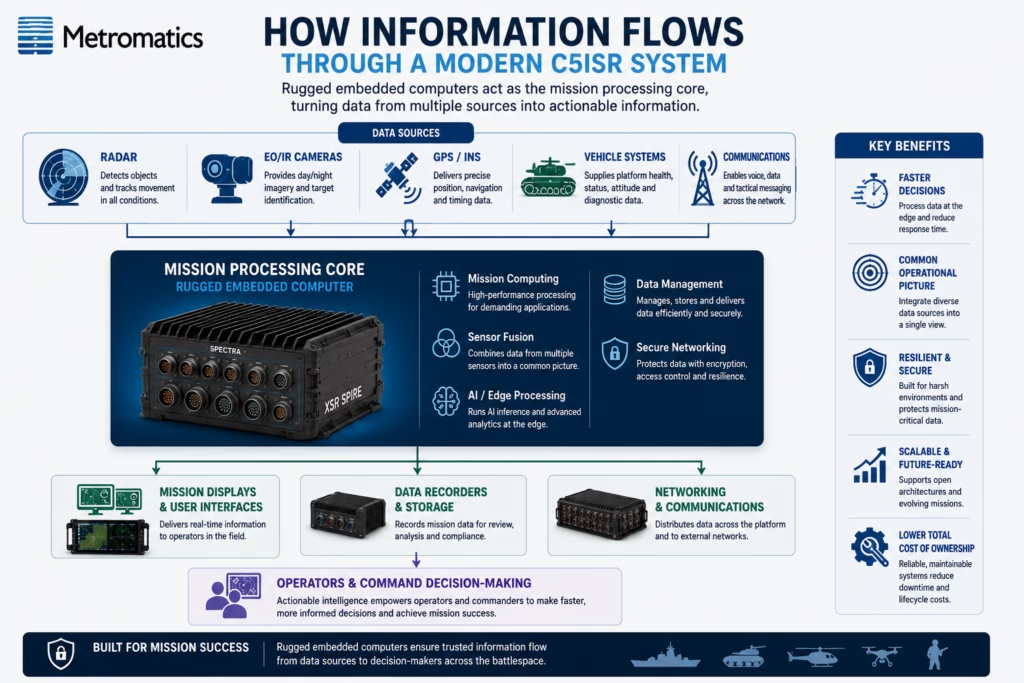
The rugged embedded computer acts as the central processing node, transforming raw sensor data into usable operational information before distributing it to operators or other systems.
Data Acquisition for Rugged Embedded Computers in C5ISR Systems
The first responsibility of a rugged embedded computer in a C5ISR System is acquiring data from numerous onboard systems. For example, depending on the platform, this may include acquiring information from:
- Electro-optical (EO) cameras
- Infrared (IR) cameras
- Radar systems
- Sonar systems
- GPS receivers
- Inertial Navigation Systems (INS)
- Electronic Support Measures (ESM)
- Vehicle health monitoring systems
- Communications equipment
- Weapon systems
- Environmental sensors
Since each sensor may produce information in different formats and at different data rates, one of the embedded computer’s primary roles is to collect this information and prepare it for further processing.
Sensor Fusion
No single sensor provides a complete picture of the operational environment.
For example:
- Radar may detect an object at long range but provide limited visual detail.
- An EO camera can identify the object visually but may be affected by lighting conditions.
- An infrared sensor may detect heat signatures during darkness or poor visibility.
- GPS and inertial navigation systems provide precise location and movement information.
By combining these data sources, a rugged embedded computer enables sensor fusion—the process of integrating multiple streams of information into a more accurate and comprehensive operational picture. As a result of sensor fusion, uncertainty is reduced and target tracking is improved, thus supporting faster, more informed decision making.
Mission Processing
Once information has been collected and fused, the rugged embedded computer executes the mission software responsible for analysing and managing that data.
Examples include:
- Mission management applications
- Navigation software
- Route planning
- Blue force tracking
- Battlefield management systems
- Intelligence processing
- Video management
- Communications management
- Autonomous vehicle control
- Electronic warfare applications
These applications often need to operate simultaneously while maintaining predictable performance under demanding environmental conditions.
Artificial Intelligence and Machine Learning
Many modern defence systems are incorporating artificial intelligence to assist operators in processing increasing volumes of information.
Rather than replacing human decision makers, AI can automate repetitive tasks and highlight information requiring operator attention.
Potential applications for Rugged Embedded Computers in C5ISR Systems include:
- Automatic target recognition
- Object classification
- Anomaly detection
- Motion tracking
- Terrain analysis
- Video analytics
- Threat prioritisation
- Route optimisation
- Predictive maintenance
These workloads are computationally intensive, making high performance embedded computing increasingly important as AI capabilities continue to evolve.
Networking and Data Distribution using Rugged Embedded Computers in C5ISR Systems
Once processed, information must be distributed throughout the wider C5ISR architecture.
This may involve sending data to:
- Mission displays
- Vehicle crew stations
- Command posts
- Tactical radio networks
- Satellite communications systems
- Other vehicles
- Unmanned systems
- Weapons platforms
The rugged embedded computer therefore becomes an important bridge between local processing and the wider communications network.
Rather than transmitting raw sensor data, the system can distribute processed information, reducing bandwidth requirements while improving operational efficiency.
Supporting Distributed Operations
Modern military operations increasingly involve distributed teams operating across multiple domains.
Rather than relying on a single central processing location, computing capability is often distributed across numerous platforms, including:
- Armoured vehicles
- Patrol vehicles
- Naval vessels
- Aircraft
- Ground control stations
- Uncrewed aerial systems (UAS)
- Uncrewed ground vehicles (UGV)
- Portable command systems
Each platform may process its own sensor data locally while sharing relevant information with the wider force when communications are available.
This distributed approach improves resilience by reducing dependence on any single processing node and allowing platforms to continue operating even when communications are degraded.
Key Technologies Inside Modern Rugged Embedded Computers in C5ISR Systems
Although rugged embedded computers often appear externally as compact, sealed enclosures, internally they incorporate many of the same advanced computing technologies found in enterprise servers and high performance workstations.
The difference lies in how these technologies are engineered to operate reliably within demanding operational environments.
1. Multi-Core CPUs
The central processing unit (CPU) remains the primary processing engine within most rugged embedded computers.
Modern multi core processors enable multiple applications to run simultaneously, supporting tasks such as:
- Mission software
- Sensor management
- Communications
- Navigation
- Data recording
- User interface management
Selecting the appropriate processor depends on the application’s computational requirements, power constraints and environmental considerations.
2. Graphics Processing Units (GPUs)
Originally developed for graphics rendering, Graphics Processing Units (GPUs) are now widely used for highly parallel computational workloads.
Within defence applications, GPUs may accelerate:
- Image processing
- Video analytics
- Artificial intelligence inference
- Machine learning
- Sensor fusion
- Mapping and visualisation
Because GPUs can perform thousands of operations simultaneously, they are well suited to workloads involving large volumes of image or sensor data.
3. FPGA Acceleration
Field Programmable Gate Arrays (FPGAs) provide a different approach to computation.
Unlike CPUs, which execute software instructions sequentially, FPGAs can be configured to perform specialised hardware processing for particular applications.
FPGAs are commonly used where deterministic, low latency processing is required, including:
- High-speed signal processing
- Radar processing
- Communications processing
- Encryption
- Data acquisition
- Video processing
Their flexibility allows hardware functionality to be reconfigured as system requirements evolve.
4. High-Speed Storage
Many C5ISR systems generate significant quantities of operational data that must be temporarily or permanently stored.
Examples include:
- Intelligence imagery
- Video recordings
- Radar data
- Mission logs
- Navigation information
- System diagnostics
Solid-state storage technologies provide fast data access while offering improved resistance to shock and vibration compared with traditional mechanical hard drives. Where mission data must also be captured for post-mission analysis, testing or investigation, dedicated rugged data recording systems may form part of the wider architecture.
5. High-Speed Networking
Modern rugged embedded computers frequently act as network hubs within military platforms.
Depending on system requirements, networking capabilities may support communications between sensors, displays, radios, storage devices and other onboard equipment.
Reliable internal networking becomes increasingly important as sensor resolution, video quality and AI workloads continue to increase. Rugged network equipment can provide the switching and data-distribution infrastructure required to connect these systems.
6. Expansion for Future Capability
One of the strengths of embedded computing platforms is their ability to support additional functionality through expansion technologies.
Depending on the platform, expansion may allow integration of:
- Additional networking interfaces
- Storage devices
- Communications modules
- Sensor interfaces
- Graphics processing
- AI acceleration
- Specialised I/O modules
This flexibility enables a computing platform to evolve alongside changing mission requirements rather than requiring complete system replacement.
Ruggedisation Beyond the Chassis
At first glance, a rugged embedded computer may appear to be little more than a compact computer housed in a robust metal enclosure. In reality, ruggedisation extends far beyond the external chassis. Every aspect of the system—from component selection and thermal management to power conditioning and electromagnetic compatibility—is engineered to deliver reliable operation in demanding environments.
Unlike office computers, which operate in climate controlled buildings with stable power supplies, rugged embedded computers may be deployed inside military vehicles, aircraft, naval vessels or remote installations where they are exposed to constant vibration, temperature extremes, moisture, dust and unstable electrical systems.
Meeting these challenges requires a holistic engineering approach that considers the entire operating environment rather than simply protecting the hardware from physical damage.
Environmental Protection
Military platforms routinely operate in conditions that would quickly compromise conventional computing equipment.
Depending on the application, rugged embedded computers may need to withstand:
- Continuous vibration from tracked and wheeled vehicles
- Mechanical shock caused by rough terrain or weapon discharge
- Dust and airborne contaminants
- High humidity and salt-laden marine environments
- Rain and water ingress
- Wide operating temperature ranges
- High-altitude operation
- Sand and fine particulate contamination
Rather than relying solely on external protection, rugged computers are designed from the ground up to tolerate these environmental stresses while maintaining stable operation.
Passive Cooling and Thermal Management for Rugged Embedded Computers in C5ISR Systems
One of the defining characteristics of many rugged embedded computers is the absence of cooling fans.
Traditional desktop computers use forced-air cooling to remove heat from processors and other electronic components. While effective in office environments, cooling fans introduce several potential failure points in harsh operating conditions.
Dust, sand and moisture can contaminate moving parts, while vibration may reduce the lifespan of mechanical components.
For this reason, many rugged embedded computers employ passive cooling, where heat is transferred from internal components to the external enclosure through carefully engineered thermal pathways.
Large finned heatsinks, thermally conductive materials and optimised chassis designs allow heat to dissipate naturally without requiring moving parts.
Passive cooling offers several advantages:
- Reduced maintenance requirements
- Improved long-term reliability
- Lower risk of mechanical failure
- Better resistance to dust and moisture
- Quiet operation
The effectiveness of passive cooling depends on careful thermal engineering to ensure processors and other components remain within their specified operating temperatures during sustained workloads.
Power Conditioning
Electrical power within military platforms can differ significantly from the stable mains power available in commercial environments.
Vehicle electrical systems may experience voltage fluctuations, transient events and interruptions caused by engine starting, switching operations or other onboard equipment.
To maintain reliable operation, rugged embedded computers often incorporate power conditioning features designed to tolerate variations in input voltage and protect sensitive electronic components from electrical disturbances.
Reliable power management is particularly important for mission critical systems where unexpected shutdowns could interrupt operational capability.
Electromagnetic Compatibility (EMC)
Modern military platforms contain numerous electronic systems operating in close proximity.
Communications equipment, radar systems, navigation systems, electronic warfare equipment and onboard computing platforms all generate electromagnetic energy.
Without appropriate design, electronic equipment may interfere with one another, potentially degrading system performance.
Rugged embedded computers intended for defence applications are therefore designed with electromagnetic compatibility (EMC) in mind, helping ensure they operate reliably alongside other mission systems while minimising unwanted electromagnetic emissions.
Military Standards for Rugged Embedded Computers in C5ISR Systems
Many defence programs specify recognised environmental and electromagnetic standards as part of system procurement.
While the exact requirements vary depending on the platform and program, commonly referenced standards may address areas such as:
- Environmental testing
- Mechanical shock
- Vibration
- Electromagnetic compatibility
- Vehicle power requirements
- Aircraft electrical power
Compliance with these standards provides a consistent framework for evaluating whether equipment is suitable for particular operating environments.
However, it is important to recognise that the required standards differ between projects. Procurement teams should always confirm that a computing platform meets the specific environmental and electrical requirements defined for their application.
Reliability for Long Operational Lifecycles
Unlike consumer electronics, defence platforms are frequently expected to remain in service for decades.
Aircraft, naval vessels, armoured vehicles and fixed installations often undergo incremental upgrades throughout their operational life rather than complete replacement.
As a result, selecting a rugged embedded computer involves more than evaluating current performance.
Long-term considerations include:
- Component availability
- Configuration management
- Product lifecycle support
- Software compatibility
- Spare parts availability
- Ongoing maintenance
- Future technology refreshes
A platform that performs well today but becomes unavailable within a few years may introduce significant integration and sustainment challenges over the life of the defence program.
For this reason, lifecycle planning is often as important as processing performance when selecting embedded computing hardware.
Selecting a Rugged Embedded Computer for C5ISR Systems
Choosing a rugged embedded computer is rarely as simple as selecting the fastest processor. In a C5ISR environment, computing platforms must balance processing capability with environmental resilience, integration requirements and long-term support.
The optimal solution depends on the mission profile, platform constraints and the wider system architecture. Engineers and procurement teams should evaluate several key factors before selecting a computing platform.
1. SWaP (Size, Weight and Power)
Size, Weight and Power—commonly referred to as SWaP—is one of the most important considerations in defence system design.
Every additional kilogram, cubic centimetre and watt of power consumption affects the overall platform.
This is particularly important for:
- Uncrewed aerial systems (UAS)
- Ground robots
- Portable command systems
- Vehicle-mounted electronics
- Naval platforms with constrained equipment spaces
A computing platform should provide sufficient processing performance while remaining compatible with the physical and power constraints of the host platform.
2. Processing Requirements
Computing requirements vary significantly between applications.
A platform performing vehicle management functions may have very different processing needs from one supporting AI-enabled video analytics or multi sensor fusion.
Key considerations include:
- CPU performance
- Graphics processing requirements
- Artificial intelligence workloads
- Real-time processing needs
- Memory capacity
- Storage performance
- Future software growth
Selecting appropriate processing resources helps avoid both underpowered systems and unnecessary over specification.
3. Interfaces and Connectivity of Rugged Embedded Computers in C5ISR Systems
One of the most important aspects of any embedded computing platform is its ability to communicate with the wider system.
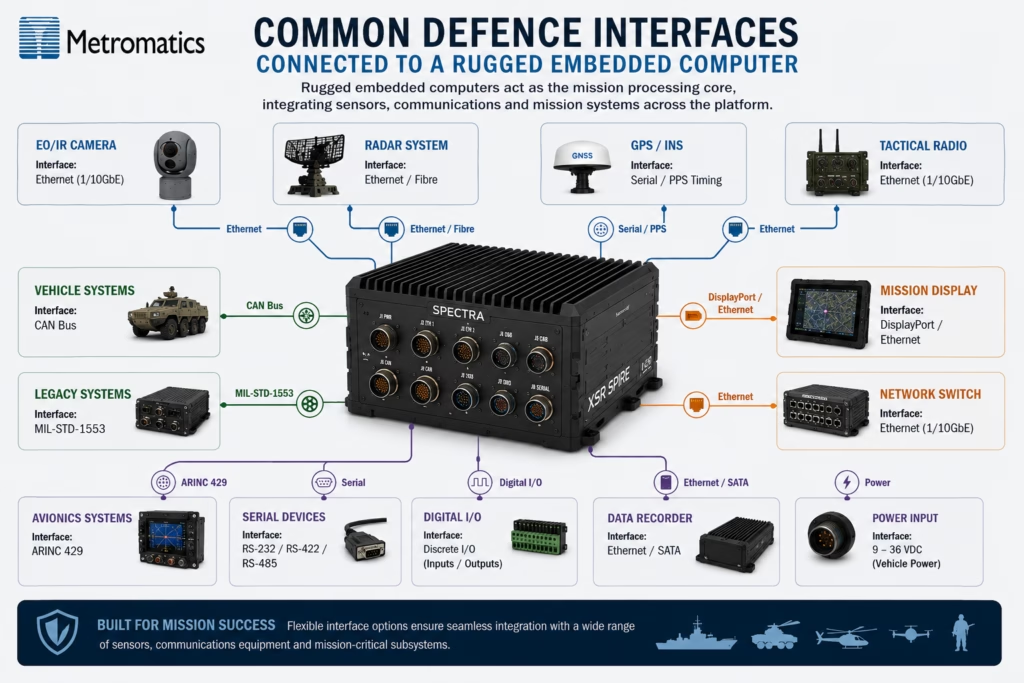
Depending on the application, engineers may require support for a range of networking and interface technologies to connect sensors, displays, communications equipment, storage devices and other mission systems. The appropriate interface mix depends on the platform architecture and the equipment being integrated.
Common interface requirements may include:
a. Ethernet
Ethernet has become one of the primary networking technologies within modern defence systems.
High-speed Ethernet networks support communication between:
- Mission computers
- Sensor systems
- Operator displays
- Data storage devices
- Communications equipment
- Network switches
- Other onboard processors
As sensor resolution and data volumes continue to increase, higher speed Ethernet technologies are increasingly used to transport imagery, video and mission data throughout the platform.
b. CAN Bus
Controller Area Network (CAN Bus) is widely used for reliable communication between electronic control systems.
Within military vehicles and autonomous platforms, CAN Bus may be used to exchange information relating to:
- Vehicle health monitoring
- Engine management
- Navigation systems
- Environmental monitoring
- Platform control systems
Its robustness and deterministic communication make it well suited to distributed vehicle electronics.
c. MIL-STD-1553
MIL-STD-1553 is a long established military communications bus used extensively in aerospace and defence applications.
It provides deterministic communication between avionics, mission computers and other onboard subsystems, making it suitable for applications where predictable data exchange is essential.
Although newer networking technologies are increasingly common, MIL-STD-1553 continues to be used across many existing military platforms.
d. ARINC 429
ARINC 429 is widely used within civil and military aviation for communication between avionics equipment.
Embedded computers supporting airborne applications may require ARINC interfaces when integrating navigation systems, flight instrumentation or other aircraft subsystems.
Where these interfaces need to be added to an embedded computing architecture, MIL-STD-1553 and ARINC avionics interface cards can provide dedicated connectivity between the mission computer and existing avionics systems.
e. Serial Communications
Despite the growth of Ethernet-based networking, serial interfaces remain important within many embedded systems.
Standards such as RS-232, RS-422 and RS-485 continue to support communication with legacy equipment, specialised sensors and industrial control devices.
Maintaining compatibility with both modern and legacy interfaces allows defence platforms to integrate existing equipment alongside newer technologies.
f. USB
Universal Serial Bus (USB) provides convenient connectivity for maintenance, software loading, removable storage and peripheral devices.
Depending on the application, USB interfaces may also support external sensors, keyboards, pointing devices or portable data storage during maintenance activities.
g. Digital Input/Output (Digital I/O)
Digital I/O provides simple electrical interfaces for monitoring or controlling external equipment.
Typical applications include:
- Trigger signals
- Alarm monitoring
- Equipment status
- Synchronisation signals
- External device control
These interfaces enable rugged embedded computers to interact with systems beyond traditional networking technologies.
4. Timing and Synchronisation
Many defence applications require precise timing to coordinate data collected from multiple sensors.
Depending on the system architecture, embedded computers may support timing interfaces used for synchronisation across distributed systems, ensuring that sensor data can be accurately correlated during processing.
Precise timing becomes increasingly important for applications involving sensor fusion, navigation and distributed mission systems.
5. Why Interface Flexibility Matters for Rugged Embedded Computers in C5ISR Systems
Selecting a rugged embedded computer is not simply about processing performance. This is because a computing platform must also integrate seamlessly with the sensors, communications equipment and mission systems that make up the wider C5ISR architecture.
Platforms offering flexible networking, expansion options and support for commonly used defence interfaces also provide greater adaptability as operational requirements evolve. This quality reduces integration effort and extends the useful life of the system as a result.
6. Expansion and Scalability for Rugged Embedded Computers in C5ISR Systems
Mission requirements evolve over time. As a result, selecting a platform that supports future expansion can simplify system upgrades and reduce the need for complete hardware replacement as new capabilities are introduced.
Expansion may include additional networking, storage, communications interfaces, AI accelerators or other application specific functionality, depending on the platform architecture.
Considering future scalability during initial system design can help reduce lifecycle costs while extending the operational usefulness of the computing platform.
7. Environmental Certification of Rugged Embedded Computers in C5ISR Systems
Environmental performance is one of the defining characteristics of a rugged embedded computer. While processing power is important, the ability to operate reliably in the intended environment is often equally critical.
Different defence programs specify different environmental requirements depending on the platform and mission profile. A computing platform designed for a naval vessel may have different requirements to one intended for an armoured vehicle or an airborne ISR platform.
When evaluating a rugged embedded computer, engineers should consider factors such as:
- Operating temperature range
- Resistance to shock and vibration
- Protection against dust and moisture
- Electromagnetic compatibility (EMC)
- Input power requirements
- Altitude and humidity ratings (where applicable)
Many defence programs reference recognised military or industry standards to verify environmental performance. However, compliance with a particular standard should always be assessed against the specific requirements of the project rather than assumed to be universally applicable.
Selecting a computing platform that aligns with the operational environment helps reduce integration risk and supports long-term reliability throughout the life of the system.
8. Cooling Strategy for Rugged Embedded Computers in C5ISR Systems
Heat management plays a significant role in both system reliability and long-term performance. This is because as processors become more powerful and AI workloads continue to increase, effective thermal management becomes increasingly important.
Several cooling approaches are used within embedded computing, including:
a. Passive Cooling
Passive cooling transfers heat through the enclosure using thermally conductive materials and external heatsinks.
Advantages include:
- No moving parts
- Lower maintenance
- Improved reliability
- Better resistance to dust and moisture
- Reduced acoustic noise
Passive cooling is commonly used in rugged embedded computers intended for harsh environments.
b. Forced-Air Cooling
Forced-air cooling uses internal fans to increase airflow across heat-generating components.
This approach can support higher thermal loads but introduces moving parts that may require additional maintenance and may be less suitable for environments with high levels of dust, vibration or airborne contaminants.
c. Conduction Cooling
Some defence platforms use conduction-cooled systems, where heat is transferred directly into the surrounding structure or chassis.
This approach is commonly used where sealed enclosures are required or where airflow is limited.
The appropriate cooling method depends on the application’s thermal requirements, environmental conditions and installation constraints.
9. Lifecycle Support and Obsolescence Management of Rugged Embedded Computers in C5ISR Systems
Unlike commercial IT systems, defence programs often remain operational for many years, with some platforms continuing in service for several decades.
Over this period, electronic components inevitably reach end-of-life, processors are superseded and commercial product lines change. As a result, organisations should therefore consider more than the initial hardware specification when selecting a rugged embedded computer.
For example, important lifecycle considerations include:
- Long-term product availability
- Configuration control
- Component obsolescence management
- Availability of spare parts
- Repair and maintenance services
- Software compatibility over time
- Upgrade pathways
Planning for lifecycle support during the initial procurement phase can reduce future integration challenges and help minimise the cost of maintaining capability throughout the life of the platform.
10. Vendor Support and Systems Integration
A rugged embedded computer rarely operates as a standalone product.
Instead, it forms part of a much larger C5ISR architecture involving sensors, communications systems, displays, software applications and mission equipment. Working with an experienced systems integration partner can help reduce project risk, streamline deployment and simplify future upgrades as operational requirements evolve.
As a result, a supplier’s technical expertise and support capabilities are often just as important as the hardware itself.
When evaluating suppliers, organisations should consider factors such as:
- Technical engineering support
- Product documentation
- Systems integration experience
- Customisation capabilities
- Local technical assistance
- Product training
- Long-term service and maintenance
Working with an experienced systems integration partner can help reduce project risk, streamline deployment and simplify future upgrades as operational requirements evolve.
A Real-World Example: The Spectra XSR Spire Rugged Embedded Computer for C5ISR Systems
The principles discussed throughout this article can be seen in rugged embedded computing platforms designed specifically for defence and aerospace applications.
One example is the Spectra XSR Spire Rugged Embedded Computer, a sealed, high performance mission computing platform developed to support demanding edge computing applications.
Designed by Spectra Defence Technologies for deployment in harsh operational environments, the XSR Spire combines high performance processing with a rugged enclosure intended for use across defence, aerospace and other mission critical applications.
Key published capabilities include:
- Sealed IP66/IP67 enclosure for protection against dust and water ingress
- Support for Intel® Xeon® W-11865MRE processors
- Passive cooling with no internal fans
- Support for expansion technologies including XMC and Mini PCIe
- High-speed networking, including 10 Gigabit Ethernet
- Support for defence and aerospace interfaces such as CAN Bus, ARINC 429 and MIL-STD-1553 (configuration dependent)
- Designed to support demanding applications including sensor fusion, mission computing, tactical networking and edge AI
Rather than serving as a general-purpose computer, platforms such as the XSR Spire are intended to become the mission processing core within larger C5ISR architectures.
By combining rugged environmental protection with high-performance computing and flexible expansion capabilities, these systems enable engineers to integrate multiple sensors, communications technologies and mission applications into a single computing platform while maintaining reliable operation in challenging environments.
Looking Beyond Today’s C5ISR Systems
The role of rugged embedded computers continues to evolve as defence technologies become increasingly software defined and data driven.ffk
Several trends are shaping the next generation of mission computing.
Artificial Intelligence at the Tactical Edge
AI-assisted decision support is becoming increasingly important across intelligence, surveillance, autonomous systems and predictive maintenance applications.
As AI workloads grow, embedded computing platforms will continue to require higher processing performance while maintaining the environmental resilience expected of deployed military systems.
Open Systems Architectures
Defence platforms often remain in service far longer than the individual computing technologies installed within them. Processors, networking technologies, sensors and software can evolve significantly during the operational life of a vehicle, aircraft or other military platform. Designing systems that can accommodate these changes without requiring complete replacement is therefore an important consideration for long-term capability development.
Open systems architectures support this approach by using defined interfaces, modular components and common standards to reduce dependence on proprietary solutions. In the United States, initiatives such as the Modular Open Systems Approach (MOSA), together with standards and architectures including SOSA™ (Sensor Open Systems Architecture) and CMOSS (C5ISR/EW Modular Open Suite of Standards), are intended to improve interoperability, modularity and the ability to integrate new technologies over time.
For rugged embedded computing, this has important practical implications. A modular computing architecture can make it easier to introduce new processing, networking, sensor interface or acceleration capabilities as mission requirements evolve. Rather than replacing an entire computing system, individual hardware or software elements may be upgraded where the system architecture supports that level of modularity.
This approach can also assist with technology refresh and obsolescence management. Electronic components inevitably become obsolete during the lifecycle of long-running defence programs. Architectures that use well defined interfaces and modular components can provide greater flexibility when ageing hardware needs to be replaced or new capabilities introduced.
However, open architecture does not mean that every component is automatically interchangeable. Compatibility still depends on factors such as interface standards, mechanical and electrical requirements, software integration, environmental qualification and the specific architecture implemented by the program. These requirements need to be considered during system design and technology refresh planning.
As defence systems become increasingly software defined and data driven, the ability to upgrade computing capability without redesigning an entire platform will become increasingly valuable. Rugged embedded computers that support flexible expansion and integration can therefore play an important role in helping C5ISR systems adapt to changing mission requirements throughout their operational lifecycle.
Greater Distribution of Computing
Rather than concentrating computing resources within a single platform, future C5ISR architectures are expected to distribute processing across multiple vehicles, sensors, autonomous systems and command nodes.
This distributed approach increases resilience, reduces latency and enables information to be processed closer to where it is collected.
As edge computing continues to mature, rugged embedded computers will remain a foundational technology supporting distributed, resilient and information-driven military operations.
Conclusion
Modern C5ISR systems depend on rugged embedded computers to collect, process, analyse and distribute information across increasingly complex operational environments.
This is because rugged embedded computers provide the mission processing capability that enables sensor fusion, communications management, artificial intelligence and mission applications to operate reliably in harsh conditions where conventional computing platforms are unlikely to perform.
As a result, selecting the right embedded computing platform requires balancing processing performance with environmental resilience, interface requirements, expansion capability, lifecycle support and integration expertise. In fact, by considering these factors early in the design process, defence organisations can reduce technical risk while building systems that remain capable and supportable throughout their operational life.
Whether deployed within armoured vehicles, naval vessels, aircraft, autonomous platforms or fixed command systems, rugged embedded computers continue to play a central role in enabling faster, more informed decision making across modern C5ISR architectures.