
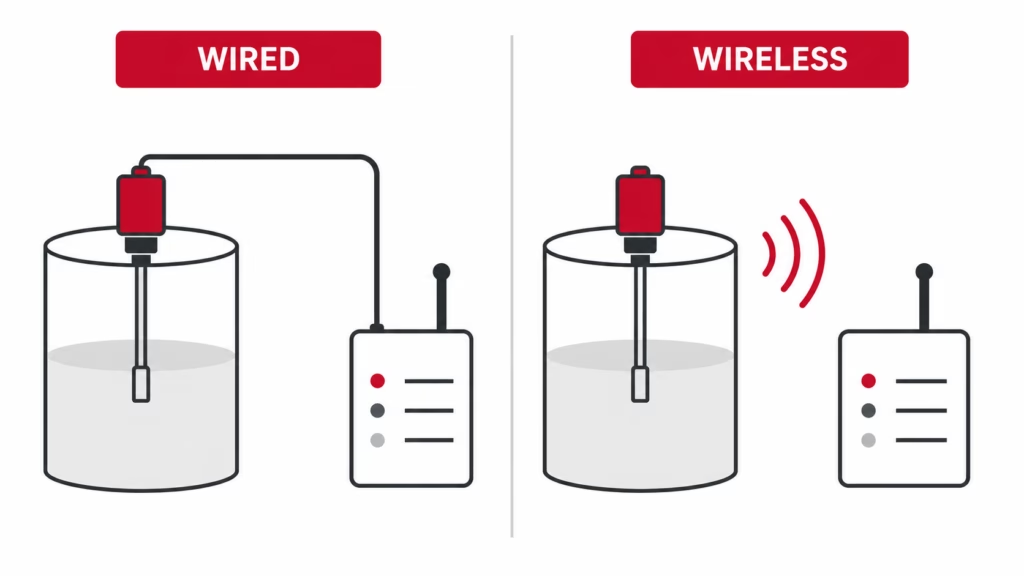
If you need to check a tank in a distant paddock, at a depot or across a large industrial site, remote monitoring can save repeated trips just to see what is happening. However, before choosing a system, there is an important question to answer: should the tank level sensor connect to the monitoring equipment by cable or wirelessly?
There is no single answer for every site. A wired connection may be the simplest choice when power and cabling are already available. A wireless connection may be more practical when the tank is difficult to reach or installing a cable would cause disruption. In some situations, a combination of wired and wireless equipment works best.
The following guide explains the difference in plain language, then looks at the practical questions that can help you choose.
What does a remote tank monitoring system actually do?
A remote monitoring system has three main jobs:
- A sensor measures the level in the tank.
- A field monitor or gateway collects that reading.
- The gateway sends the reported information to the LevelCon cloud platform, where authorised users can view it remotely.
Think of a water tank on the far side of a property. The sensor takes the measurement at the tank, the gateway passes that information on, and the cloud platform lets the manager review the reported level without driving out to inspect it.
The words wired and wireless usually describe how the sensor sends its reading to the gateway. They do not necessarily describe how the gateway connects to the cloud.
For example, a sensor may be connected to a gateway by cable, while the gateway uses a cellular connection to send the information off-site. This is still a wired sensor connection, even though the information can be viewed remotely.
How does a wired tank level sensor work?
A wired tank level sensor sends its measurement to the gateway through a physical cable. Metromatics offers wired sensors for remote monitoring, including compatible pressure, radar and ultrasonic options for different applications.
In everyday terms, it works much like other equipment permanently connected on a site. If a tank sits beside a pump shed with suitable power, conduit and a protected cable route, connecting the sensor directly to a nearby gateway may be straightforward.
The cable must still suit the sensor, distance and environment. It also needs to be installed and protected from weather, machinery and site activity.
For example, a cable running a short distance inside an established facility may be easy to protect. Running a new cable across an active yard or trenching it to a remote tank may involve considerably more work.
How does a wireless tank level sensor work?
A compatible LevelCon wireless sensor sends its reading to a LevelCon gateway without a signal cable running between the two devices. The gateway then sends the reported information to the LevelCon platform through its configured communications service.
For example, several tanks may be spread around a property while the gateway is positioned where communications are better. Compatible wireless sensors can report to that gateway without installing a separate signal cable from every tank.
Wireless does not mean that nothing needs to be installed or maintained. The sensor still needs the correct mounting position, and the equipment must be placed where the wireless connection can work. The exact power or battery arrangement also depends on the product.
A practical example is a tank behind a large shed. Although the distance may look suitable on paper, the shed could sit directly between the sensor and gateway. The equipment positions would therefore need to be assessed before the system is selected.
A useful third option: combining wired and wireless equipment
Sometimes the most suitable measuring device is a wired sensor, but running its signal cable all the way to the gateway is impractical. In this situation, a compatible LevelCon WP01SN sensor node can connect to an industry-standard wired sensor and pass its reading wirelessly to compatible LevelCon equipment.
For example, a site may need a particular wired sensor because it suits the liquid or tank, yet the gateway needs to be installed on another part of the property. The wired sensor can connect locally to the WP01SN, while the sensor node handles the wireless link back to the gateway.
This is why it is helpful to choose the sensor and the connection separately. The best way to measure the tank does not always determine how the reading should travel across the site.
Wireless vs wired tank level sensors: what should you compare?
1. Existing cabling and power
Start by looking at what is already available. A wired option can be practical when the tank is close to suitable power and an existing protected cable route.
For example, an indoor process tank beside a control cabinet may need only a short, protected connection. By comparison, a tank hundreds of metres from the nearest building may require trenching or exposed cabling, making a wireless option worth considering.
2. The layout of the site
A wireless connection removes the need for a signal cable between the sensor and gateway, but buildings, tanks, terrain and other obstacles may affect that connection.
For example, two tanks may be close together on a map, yet a steel building or a rise in the land may sit between them. The actual equipment positions matter more than distance alone.
3. The liquid and the tank
The sensor must suit what is being stored and how the tank is built. The liquid, tank size, available mounting point, required measurement range and material compatibility all affect sensor choice.
For example, a sensor arrangement that suits a clean water tank may not be the right choice for a chemical tank. Metromatics should first identify a suitable sensing method, then determine whether a direct wired connection, a wireless sensor or a WP01SN combination is appropriate.
4. Access for maintenance
The equipment must remain accessible for inspection and maintenance. Some wired sensors receive power through their connection, while several LevelCon wireless products use replaceable batteries. The exact arrangement depends on the selected equipment.
For example, replacing a battery may be simple on a tank beside a workshop but inconvenient at a remote or restricted location. On the other hand, repairing a damaged cable across a busy yard may be more disruptive than maintaining a wireless device.
5. Future changes
Consider whether tanks or monitoring points are likely to move or be added. Wireless equipment may provide more flexibility where installing new cable would be difficult, while an established wired system may remain practical at a stable site.
For example, a business that regularly relocates portable tanks may value a configuration that avoids installing a new signal cable each time. A permanent facility with fixed tanks and established conduit may have less need for that flexibility.
When might wired be the better fit?
A wired connection may be worth considering when:
- the sensor and gateway will be close together
- suitable power and protected cable routes already exist
- the preferred sensor requires a wired output
- battery access would be inconvenient
- the site does not provide a suitable wireless path
For example, a fixed tank inside an established plant may already have everything needed for a short wired connection. Adding wireless equipment may offer little practical benefit in that situation.
When might wireless be the better fit?
A wireless connection may be worth considering when:
- running a signal cable would be difficult or disruptive
- tanks are spread around the property or facility
- the gateway needs to be placed away from the tank
- a compatible LevelCon wireless sensor suits the measurement
- a suitable wired sensor can be paired with a WP01SN sensor node
For example, a remote fuel or water tank may sit well away from existing power and cable routes. If the site layout supports the wireless connection, compatible wireless equipment may reduce the field cabling required.
Where does Gateway fit into the system?
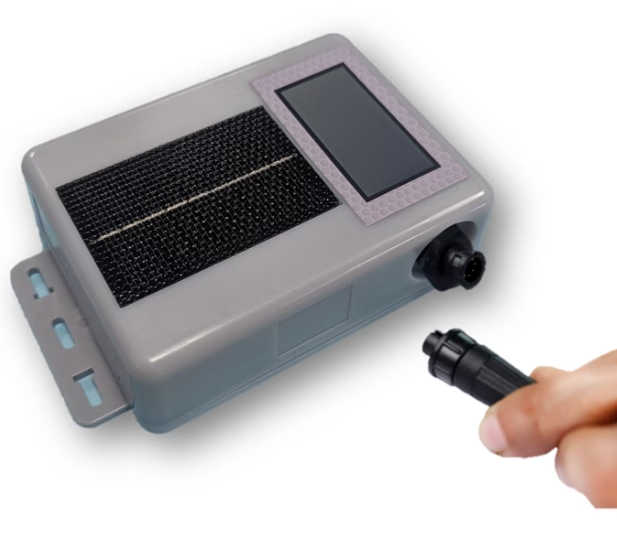
The gateway connects the field sensor to the LevelCon platform. Depending on the selected configuration, a sensor may connect directly by cable or communicate through a compatible wireless sensor network. For current installations, the LevelCon F200 or another supported gateway should be selected according to the sensor interface, power, communications coverage and reporting requirements.’
What information will help Metromatics recommend a system?
You do not need to select every component before asking for advice. Instead, provide the practical details of the application:
- what is stored in the tank
- the tank dimensions and construction
- the measurement you need
- the distance and obstacles between the tank and possible gateway location
- available power, cable routes and mounting points
- cellular coverage and whether a suitable satellite option may be needed
- how often you need reported information and what alerts are required
- how easily the equipment can be accessed for maintenance
For example, photographs of the tank, its fittings and the surrounding area can help explain whether there is a clear wireless path or an easy cable route. With the full site picture, Metromatics can compare a direct wired connection, a purpose-built wireless sensor or a wired sensor paired with a compatible wireless sensor node.
Frequently asked questions
Are wireless tank level sensors completely cable-free?
Not always. A purpose-built wireless sensor may not need a signal cable to the gateway, but mounting and power requirements vary. Another option uses a wired sensor connected to a wireless WP01SN sensor node.
For example, the cable may run only a short distance from the sensor to the nearby sensor node rather than all the way across the site to the gateway.
Is a wired sensor more reliable than a wireless sensor?
Neither option is automatically better for every installation. A wired system relies on suitable cabling, connections and power. A wireless system relies on compatible equipment, appropriate positioning and its battery or power arrangement.
For example, a protected cable inside a building may be very practical, while an exposed cable across a working yard may be more vulnerable. The better option depends on the actual site.
Can an existing wired sensor be used in a wireless LevelCon system?
Potentially. LevelCon states that the WP01SN sensor node can pair with compatible industry-standard wired sensors to create a wireless sensor option. Compatibility and the complete system configuration still need to be confirmed.
For example, an existing sensor may be suitable for the tank, but its output must be checked before assuming it can connect to a WP01SN.
Does wireless monitoring provide a continuously live reading?
Not necessarily. The information shown in the LevelCon platform depends on the equipment, measurement and reporting settings, communications availability and system configuration.
For example, a site may be configured to send scheduled readings and selected alerts rather than a constantly changing display.
Talk to Metromatics about your tank monitoring options
The right solution starts with the tank, liquid and site—not with choosing wired or wireless in isolation. Explore Metromatics’ LevelCon remote monitoring solutions or contact Metromatics with your tank, site layout, power, connectivity and reporting requirements. Our team can help assess a suitable combination of sensor, gateway and cloud monitoring equipment.